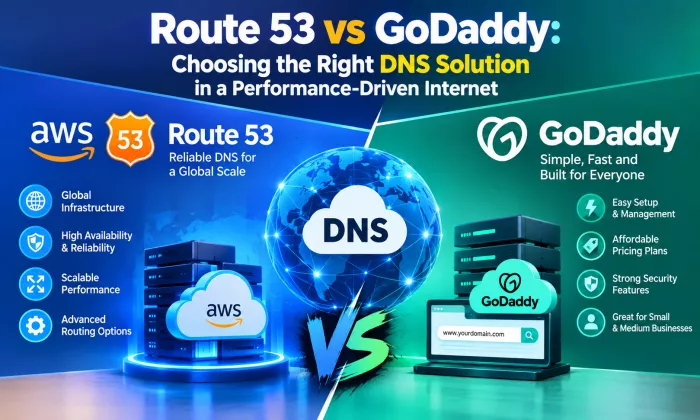
Selecting the right DNS provider is not just a technical decision. It directly impacts website performance, uptime, scalability, and long-term infrastructure flexibility. While many users treat DNS as a background service, it plays a critical role in how quickly and reliably users can access digital platforms.
Two of the most commonly compared options are Amazon Route 53 and GoDaddy DNS. At a surface level, both provide domain and DNS services, but in reality, they are built for entirely different audiences and use cases.
Understanding the difference between them requires looking beyond features and into philosophy, architecture, and intended user experience.
Amazon Route 53 is designed as part of the broader AWS ecosystem. It is built for high availability, low latency, and global scalability, making it a natural choice for developers, DevOps teams, and businesses operating at scale.
Its architecture leverages a global network of distributed servers, allowing it to route traffic intelligently based on location, latency, and system health. This makes it particularly effective for applications that serve users across multiple regions.
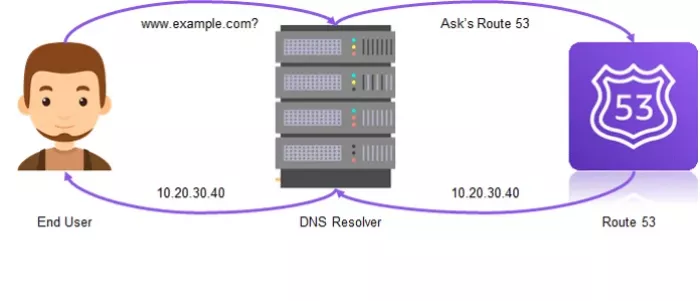
In contrast, GoDaddy approaches DNS from a completely different perspective. It is designed for ease of use and accessibility, targeting small businesses, individuals, and non-technical users who want to get online quickly without dealing with complex configurations.
Rather than focusing on advanced routing or infrastructure integration, GoDaddy emphasizes simplicity, bundled services, and guided setup experiences.
| Capability Area | Amazon Route 53 | GoDaddy DNS |
| Routing Intelligence | Advanced routing including latency, geo, and failover | Basic routing with limited automation |
| Health Monitoring | Built-in health checks and automatic failover | No native health checks |
| Integration | Deep integration with AWS services | Integrated with hosting and domain tools |
| Automation | Full API and infrastructure-as-code support | Limited automation capabilities |
| Scalability | Designed for global, high-traffic systems | Suitable for small to medium websites |
| Ease of Use | Requires technical knowledge | Beginner-friendly interface |
This comparison highlights a clear divide. Route 53 is engineered for control and performance, while GoDaddy is optimized for simplicity and accessibility.
One of the most important differences between these platforms lies in how they approach pricing.
Route 53 follows a usage-based pricing model, where users pay for hosted zones, DNS queries, and additional features such as health checks. This model provides flexibility and scalability, but it also introduces variability. Costs can remain low for smaller workloads but increase as traffic grows.
GoDaddy, on the other hand, uses a more fixed pricing structure, especially when DNS is bundled with domain registration or hosting plans. This makes it easier for beginners to predict costs, but it can become more expensive over time due to renewals and add-ons.
| Pricing Factor | Route 53 | GoDaddy |
| Cost Structure | Pay-as-you-go | Fixed or bundled pricing |
| DNS Queries | Charged per million requests | Included in plans |
| Hosted Zones | Monthly fee per zone | Included with domain |
| Scalability Cost | Scales with usage | Limited scalability but predictable cost |
| Long-Term Value | Cost-efficient at scale | Can increase due to renewals and upsells |
This creates a fundamental trade-off between cost predictability and scalability efficiency.
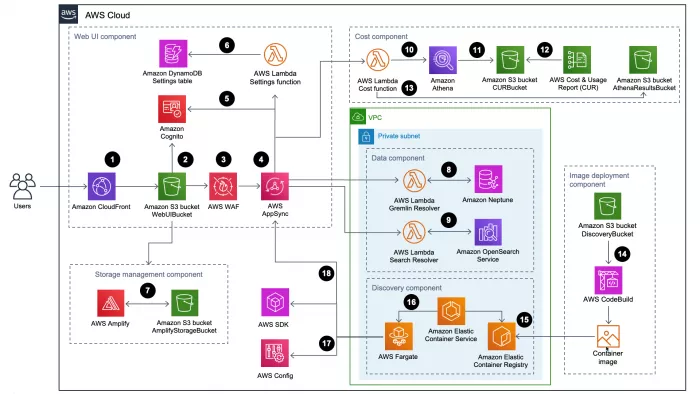
Performance is where Route 53 clearly differentiates itself. Built on AWS infrastructure, it uses a global anycast network to ensure low-latency responses and high availability. It also supports automatic failover, meaning traffic can be rerouted instantly if a resource becomes unavailable.
For applications that require consistent uptime and global reach, this level of reliability is essential.
GoDaddy provides stable performance for most standard use cases, particularly for small websites and local businesses. However, it lacks advanced failover mechanisms and automated routing capabilities. This means that in the event of an issue, intervention may be required to restore service.
The difference here is not about basic functionality, but about how systems behave under stress and scale.
Ease of use is one of GoDaddy’s strongest advantages. Its interface is designed to guide users through setup with minimal technical knowledge. This makes it an ideal choice for individuals who want to launch a website quickly without dealing with DNS complexities.
Route 53, in contrast, comes with a steeper learning curve. Its interface and configuration options are tailored for users who are comfortable working within cloud environments. While this complexity can be challenging for beginners, it provides greater control and flexibility for advanced users.
User feedback reflects the intended audiences of both platforms. Route 53 is consistently praised for its reliability, scalability, and integration capabilities, particularly among developers and enterprise users.
At the same time, some users highlight its complexity and learning curve as potential barriers.
GoDaddy receives positive feedback for its simplicity and customer support, especially among small businesses. However, criticisms often focus on pricing practices, limited advanced features, and occasional reliability concerns.
This reinforces the idea that each platform succeeds within its intended use case rather than competing directly on the same criteria.
The comparison between Route 53 and GoDaddy is not about which platform is better in absolute terms. It is about which platform aligns with your specific needs and technical environment.
Route 53 is best suited for users who require performance, scalability, and deep infrastructure integration. It is a natural fit for cloud-based applications, global services, and teams that rely on automation and advanced routing.
GoDaddy is ideal for users who prioritize simplicity, speed of setup, and ease of management. It works well for small businesses, personal websites, and projects that do not require complex DNS configurations.
In practical terms, the decision comes down to a single question. Are you building a system that needs to scale and adapt globally, or are you launching something that needs to work quickly and simply?
That distinction defines the entire choice.

a place where users could create interactive characters, explore long...

A detailed Luminarbrush.ai review based on real usage, exploring its l...

Dopple AI is not trying to be a productivity tool or a general assista...

An AI system that trades across multiple markets and generates passive...

designed specifically for hospitals, clinics, and healthcare networks...

Akool is one of the few platforms that actually bridges that gap, and...

Discussion