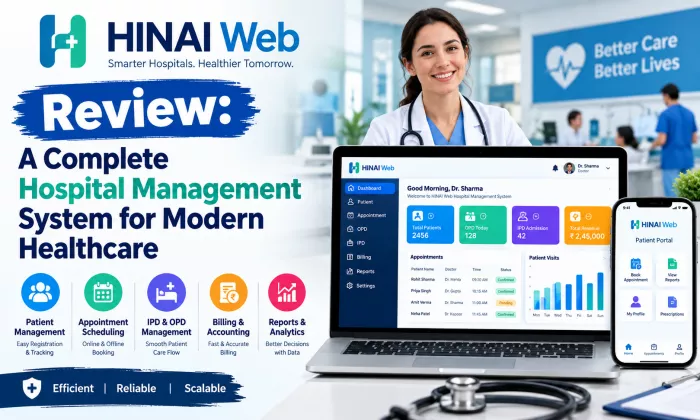
Managing a healthcare facility involves coordinating hundreds of moving parts: patient records, appointments, billing, inventory, and clinical workflows all demand precision and security.
HINAI Web positions itself as a comprehensive solution designed specifically for hospitals, clinics, and healthcare networks seeking to digitize their operations. Let us examine whether this platform delivers on its promises.
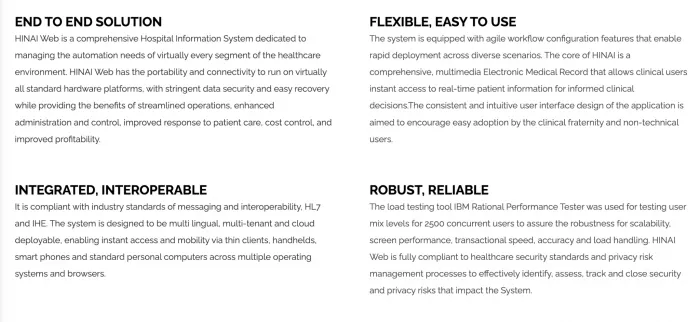
HINAI Web is a cloud-based Hospital Information System (HIS) developed by ICT Health. It aims to manage virtually every operational aspect of healthcare facilities, from patient registration through discharge and billing.
The platform serves:
It combines Electronic Health Records (EHR), practice management, billing systems, and clinical decision support into a unified interface. By integrating these traditionally separate systems, HINAI Web reduces administrative burden and improves care coordination.
| Feature | Description | Target Users |
| Electronic Health Records | Centralized, multimedia patient files | All clinical staff |
| Appointment Scheduling | Multi-resource booking with alerts | Front desk, patients |
| Billing and Invoicing | Automated claims and payment processing | Finance departments |
| Inventory Management | Track medical supplies and pharmaceuticals | Supply chain managers |
| Clinical Decision Support | AI-powered alerts and recommendations | Physicians, nurses |
| Laboratory Integration | Connect with lab equipment and systems | Pathologists, technicians |
| Telehealth Support | Remote consultation capabilities | All providers |
| Patient Portal | Self-service access for patients | Healthcare consumers |
The intake module captures comprehensive patient information, including medical history, insurance details, emergency contacts, and consent forms. Digital forms ensure accuracy and completeness from the start.
Clinical documentation supports templates, voice-to-text dictation, and image annotation. Physicians can review past visits, lab results, and imaging studies within a single interface.
The system enables electronic prescribing, drug interaction checks, and allergy alerts. Inventory tracking prevents shortages while automated reordering reduces manual oversight.
This module handles insurance verification, claim submission, payment posting, and patient billing. Automated coding suggestions improve accuracy and reimbursement speed.
Lab orders transmit directly to equipment, with results automatically flowing back into patient records, reducing delays and human error.
HINAI Web operates on a cloud-native architecture designed specifically for healthcare environments.
Key security features include:
The Emergency Department Physician
"Having instant access to patient histories, allergies, and previous imaging in emergency situations genuinely impacts care quality."
The Hospital Administrator
"The analytics dashboard transformed how we manage capacity. Data-driven decisions replaced gut feelings."
The Nurse on the Ward
"Medication administration is safer with barcode verification. The system catches potential errors before they reach patients."
The IT Director
"Implementation required significant resources, but the vendor's technical team was responsive. Plan for dedicated internal IT support."
Healthcare facilities transitioning to HINAI Web report measurable improvements:
| Facility Type | Estimated Monthly Cost | Included Modules |
| Small Clinic | $500–$1,500 | Core EHR, scheduling, billing |
| Mid-Size Hospital | $2,000–$5,000 | Full EHR, lab integration, inventory |
| Large Network | $10,000+ | Enterprise features, integrations |
Additional costs include implementation, training, data migration, and support.
| Strengths | Weaknesses |
| Comprehensive feature set | Steep learning curve |
| Clinical decision support | Dated interface |
| Customizable workflows | Long implementation time |
| Scalable architecture | Requires IT support |
| Regulatory compliance | Cost for smaller facilities |
While HINAI Web covers a wide range of hospital management needs, it sits in a competitive space with several well-established systems. Each alternative approaches healthcare management slightly differently, depending on scale, budget, and specialization.
Epic Systems is often considered the gold standard in large hospital networks, particularly in the United States. It offers an extremely deep and interconnected ecosystem that spans everything from patient records to population health analytics. The strength of Epic lies in its end-to-end integration across departments, but that comes with significant cost, long implementation timelines, and a level of complexity that smaller organizations may struggle to manage.
Cerner PowerChart, now part of Oracle, positions itself as a more flexible enterprise solution with strong interoperability capabilities. It is widely used in hospitals that need to exchange data across systems and regions. Compared to Epic, Cerner tends to be slightly more adaptable, though it still requires substantial technical resources and investment to deploy effectively
Medidata operates in a more specialized niche, focusing on clinical trials and research environments rather than day-to-day hospital operations. Academic institutions and research-heavy organizations benefit most from its capabilities, particularly in managing complex datasets and regulatory compliance in clinical studies. However, it is not a direct replacement for a full hospital information system like HINAI Web.
NextGen Healthcare is more accessible for smaller practices and outpatient facilities. It emphasizes ambulatory care workflows, patient engagement, and usability, making it a practical option for clinics that do not require the full weight of a hospital-grade system. While it lacks the depth of enterprise platforms, it offers a more manageable learning curve and lower cost of entry.
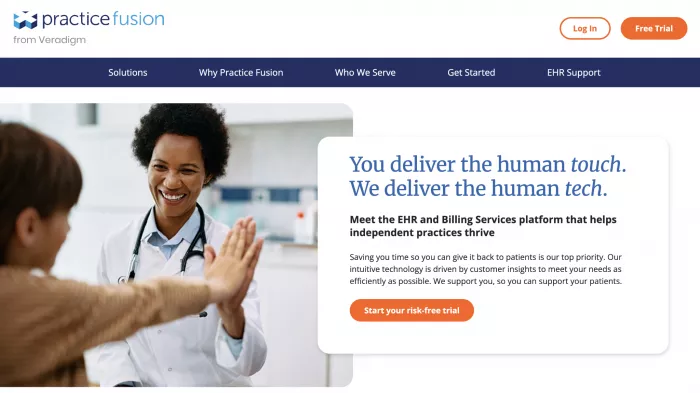
Practice Fusion takes a completely different approach with its free, cloud-based EHR model. It is particularly attractive to small clinics and independent practitioners who need basic digital recordkeeping without heavy upfront investment. The trade-off is clear though: limited features, fewer integrations, and reliance on advertising make it unsuitable for larger or more complex healthcare environments.
HINAI Web positions itself as a practical, comprehensive solution rather than a visually modern one, and that distinction matters. In healthcare environments, reliability, compliance, and functionality often outweigh aesthetics, and in those areas, the platform performs consistently well.
Its strength lies in bringing multiple hospital operations into a single, unified system, reducing fragmentation and improving coordination across departments. The inclusion of clinical decision support, real-time analytics, and integrated modules makes it particularly valuable for facilities dealing with complex workflows and high patient volumes.
However, adoption is not effortless. The implementation process, training requirements, and reliance on internal IT support mean that organizations must be prepared for a structured transition rather than a quick deployment. Smaller clinics may also find the cost and complexity harder to justify compared to lighter solutions.
In practical terms, HINAI Web works best for mid-sized hospitals and growing healthcare networks that need structure, scalability, and compliance without moving into the highest pricing tier of enterprise systems like Epic or Cerner.
It is not the most modern-looking platform, but it is one that is built around operational depth and long-term reliability. For healthcare providers prioritizing stability and comprehensive functionality, that trade-off can be entirely worthwhile.




PepHop AI is a web-based platform for interactive roleplay and dynamic...



Discussion