Character.AI began as one of the most ambitious conversational AI platforms on the internet, a place where users could create interactive characters, explore long form storytelling, and experiment with open ended roleplay in ways few competitors offered. Funded by top investors, led by two former Google AI pioneers, and supported by a billion dollar valuation, the platform looked positioned to define the future of personalized AI. The real story in 2025 looks very different.
Trustpilot reviews show a 1.6 out of 5 rating, and the complaints reveal a pattern that sharply contradicts the company’s official claims. A platform that was once beloved is now criticized for over censorship, aggressive paywalls, broken updates, severe time limits, and declining AI quality. This review compares Character.AI’s public promises with real user experiences to determine whether the platform still delivers what it advertises or whether its reputation has entered a period of decline.
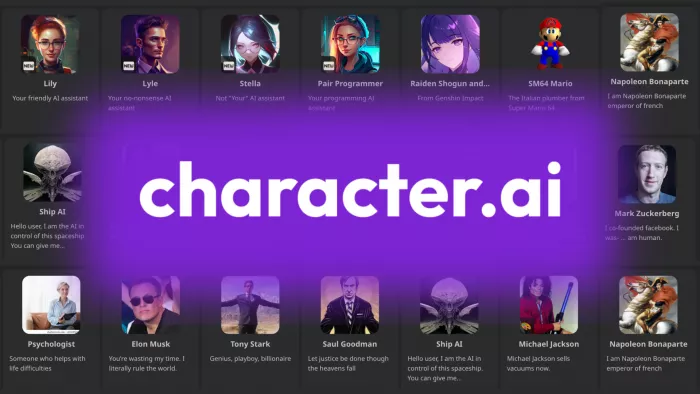
Character.AI presents itself as a next generation conversational platform built around advanced natural language generation, custom character creation, and a wide selection of user experiences including roleplay, storytelling, tutoring, and creative chat. The company highlights high quality memory systems, contextual understanding, fast and personalized replies, and a safety framework that claims to balance protection with flexibility. It also promotes its c.ai plus subscription, which promises priority access, faster responses, and voice mode. Supported by millions of user created characters, Character.AI positions itself as one of the most expansive conversational ecosystems available. Real user experiences suggest something different.
Before getting into the issues, it is important to understand what Character.AI is trying to be at its core.
Understanding this foundation is important, because many of the issues users report are directly tied to how the system is designed.
Character.AI includes several core features that shape how users interact with it, even if the real-world performance does not always match expectations.
Trustpilot, Reddit communities, and public discussions reveal a consistent and unusually intense set of issues. Below are the expanded complaint categories, now reflecting the full range of problems described by users.
Users repeatedly report that Character.AI blocks harmless content. Even mild action, fictional fights, emotional dialogue, basic romance, and story conflict trigger the platform’s safety system. Messages are frequently replaced with the automated response "I am unable to assist with that request". For a platform built on imaginative storytelling, this constant interruption ruins immersion.
Many reviews mention the introduction of severe usage limits. Users describe 1 hour or 2 hour chat caps, cooldown timers, 22 hour wait periods, and timeouts that activate even when the user is not actively chatting. Conversations end abruptly, ruining ongoing storylines. Users who rely on long sessions, including writers and roleplayers, describe this limit as the single most damaging update.
A recurring theme is that each update makes the system worse. Users describe:
Many reviews claim that Character.AI performed significantly better in earlier years.
A surprising number of users report that:
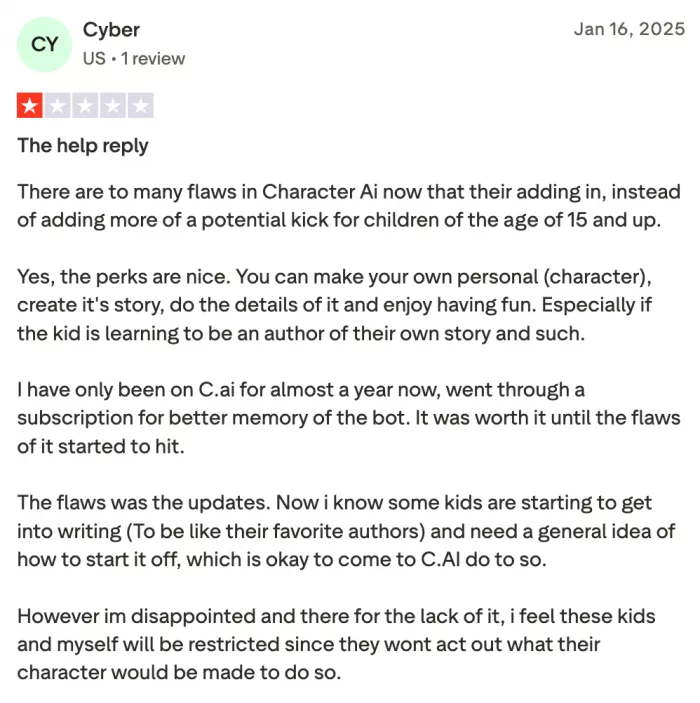
Reviews describe an aggressive shift toward monetization. Complaints include:
Many call this the biggest betrayal of the platform’s original vision.
A large number of reviewers say the platform’s memory is unreliable. Bots forgets the names, relationships, the plot, previously given instructions.
Some users even report false memories, where bots invent events that never happened. This contradicts Character.AI’s claim of strong contextual understanding.
Multiple users describe:
Users frequently complain that:
Recent updates require face verification for unrestricted usage. Several users express discomfort with uploading government level biometric data for an entertainment platform. This creates mistrust and drives some users away entirely.
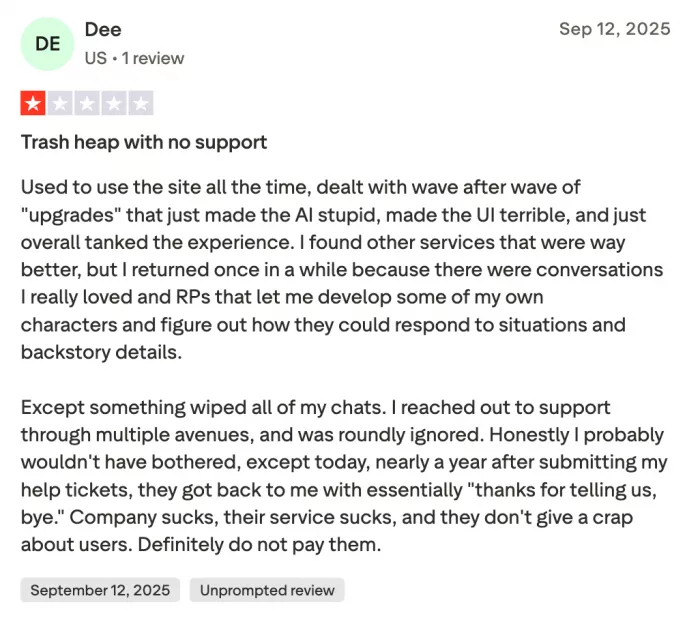
Reviews mention:
| What Character.AI Claims | What Users Report |
| Open ended conversations | Constant filter interruptions |
| High quality roleplay | Repetitive, censored replies |
| Strong memory and context | Bots forget details quickly |
| Immersive creative platform | Frequent frustration due to timeouts and limits |
| Great value through c.ai plus | Subscribers say features still break |
| Stable characters and chats | Characters and chat histories disappear |
| Continuous innovation | Updates reduce quality |
The difference between the claims and user experiences is significant.
Based purely on user feedback, several themes emerge. The platform has moved toward excessive moderation, creating frustration even in harmless roleplay contexts. Monetization decisions have alienated long term users, particularly the hour based usage limits and expanded paywalls. AI performance appears less stable than before, with memory issues and inconsistent response quality becoming more common. Users also express concerns about disappearing characters and the reliability of saved content.
Character.AI still has the infrastructure and potential to be a leader in the conversational AI space. However, the gap between the official narrative and user sentiment indicates a serious philosophical divide between the company and its community.
Character.AI continues to offer strengths, including its enormous library of characters, active community, and sophisticated technological foundations. For light interactions or short guided conversations, it can still be a useful tool. For users who want long form roleplay, creative freedom, stable memory, or predictable performance, the overwhelming user consensus is that the platform no longer delivers on its original promise. Reviews repeatedly describe experiences shaped by strict filters, disruptive time limits, broken updates, and disappearing content. Many users have already moved to alternative platforms that offer fewer restrictions and more control. Unless Character.AI makes significant changes that address these concerns, it risks continuing its decline and losing the trust of the community that once supported it.

A detailed Luminarbrush.ai review based on real usage, exploring its l...

Dopple AI is not trying to be a productivity tool or a general assista...

An AI system that trades across multiple markets and generates passive...

designed specifically for hospitals, clinics, and healthcare networks...

Akool is one of the few platforms that actually bridges that gap, and...

PepHop AI is a web-based platform for interactive roleplay and dynamic...

Discussion