Intercom has shifted from being a live chat tool to a full AI-driven support platform. Its chatbot, often referred to as Fin AI, is designed to handle real customer support queries rather than simple scripted interactions. This distinction matters because most chatbot failures happen when users ask non-linear or context-heavy questions. (https://www.intercom.com/)
Intercom performs best when it is connected to a structured knowledge base. It pulls answers from help articles, documentation, and internal resources, which allows it to deliver responses that feel consistent with your product and brand. For SaaS companies, this reduces ticket volume significantly without degrading user experience.
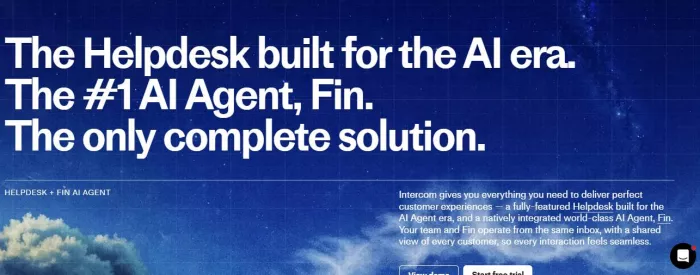
Where it struggles is cost and dependency on structured data. Pricing starts around $39 per month but scales quickly with usage and features. More importantly, if your documentation is weak, the chatbot becomes unreliable. It does not create knowledge. It organizes and retrieves it.
Performance Snapshot
● Automation strength: High for support queries
● Learning curve: Moderate
● Best environment: SaaS products with strong documentation
● Weakness: Expensive at scale
Drift is not a support chatbot. It is a revenue tool. That difference shapes how it behaves. Instead of answering questions, it focuses on qualifying leads, booking meetings, and pushing users into sales pipelines. (https://www.salesloft.com/platform/drift)
Drift performs best on high-intent traffic. When a visitor lands on a pricing page or product page, the chatbot engages immediately with targeted messaging. This reduces friction in the sales process and increases conversion rates for B2B companies.
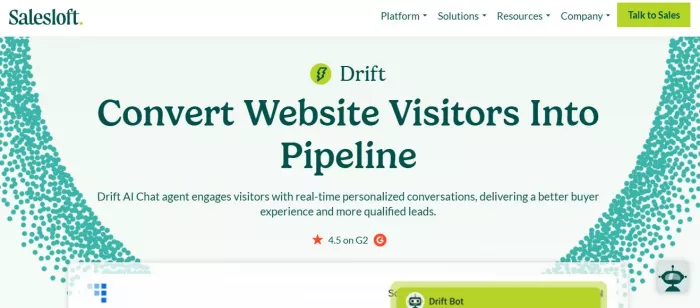
The limitation is that Drift is not built for deep support or complex automation workflows. It is optimized for speed and conversion, not depth. Pricing is also a barrier, as most plans are custom and lean toward enterprise budgets.
Use-Case Breakdown
● Best for: B2B lead qualification and sales conversations
● Not ideal for: Customer support or multi-step workflows
● Strength: High conversion impact on qualified traffic
● Trade-off: Limited flexibility outside sales use cases
Tidio sits at the opposite end of the spectrum from Drift. It is designed for accessibility and quick deployment. Small businesses and e-commerce stores use it to automate conversations without technical setup.
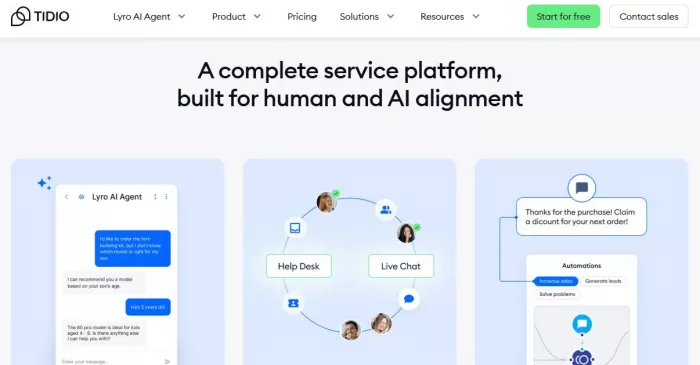
The platform combines live chat, chatbot automation, and AI responses in a single interface. Pricing starts with a free plan and moves to around $29 per month for more advanced features. That makes it one of the most accessible tools in this category. (https://www.tidio.com/)
Tidio performs well for simple automation such as answering FAQs, tracking orders, and handling basic customer queries. However, it struggles with complex workflows and deep personalization. It is not built for large-scale operations.
Quick Pros and Limitations
Pros:
● Easy setup with no technical skills required
● Affordable pricing for small businesses
● Strong for basic ecommerce support
Limitations:
● Limited customization depth
● Not suitable for enterprise workflows
● AI responses can feel generic in complex scenarios
ManyChat is built for a specific channel: messaging platforms. It dominates in environments like Instagram, Facebook Messenger, and WhatsApp, where conversational marketing drives engagement and sales. (https://manychat.com/)
Its strength lies in automation flows tied to user actions. For example, a user commenting on a post can trigger a message sequence that leads to a product recommendation or purchase. This makes it highly effective for e-commerce and creator-led businesses.
Pricing starts with a free plan and scales to around $15 to $25 per month for most users. The affordability, combined with channel-specific optimization, makes it one of the highest ROI tools for social-driven businesses.
Where it falls short is outside its core environment. ManyChat is not a general-purpose chatbot platform. It is highly effective within social ecosystems but less useful for websites or complex support scenarios.
Pricing vs Value Insight
ManyChat offers one of the lowest costs per conversion in social commerce environments. The limitation is that its value drops significantly outside those channels.
Botpress is built for developers and teams that need control. Unlike no-code tools, it allows deep customization, integration, and deployment flexibility. It can be self-hosted or used as a managed platform.
The advantage is freedom. You can design conversation flows, integrate APIs, and build complex logic that goes far beyond standard chatbot builders. This makes Botpress suitable for businesses with unique requirements. (https://botpress.com/)
The downside is complexity. It requires technical knowledge, and the setup process is significantly more involved than tools like Tidio or ManyChat. Pricing includes a free tier, but advanced usage often moves into custom or enterprise plans.
Performance Snapshot
● Customization: Very high
● Ease of use: Low to moderate
● Best for: Developers and technical teams
● Weakness: Setup complexity
Ada is an enterprise-level AI chatbot focused entirely on customer support automation. It is designed to handle high volumes of conversations with minimal human intervention.
What makes Ada different is its focus on automation at scale. It integrates with CRM systems, support platforms, and backend tools to resolve queries rather than just respond to them. This includes actions like updating accounts or processing requests. (https://www.ada.cx/)
Pricing is custom and typically high, reflecting its enterprise positioning. It is not a tool for small businesses. It is built for companies handling thousands or millions of interactions.
Use-Case Breakdown
● Best for: Large support teams and enterprises
● Strength: High automation depth and scalability
● Limitation: Expensive and complex to implement
| Tool | Starting Price | Type | Best Use Case | Rating (G2/Capterra) |
| Intercom | ~$39/month | Support automation | SaaS and customer support | ~4.5 / 4.4 |
| Drift | Custom | Conversational marketing | B2B lead generation | ~4.4 / 4.5 |
| Tidio | Free / ~$29/month | No-code chatbot | Small business automation | ~4.7 / 4.7 |
| ManyChat | Free / ~$15/month | Marketing chatbot | Social and e-commerce | ~4.6 / 4.6 |
| Botpress | Free / Custom | Developer platform | Advanced custom bots | ~4.6 / 4.5 |
| Ada | Custom (enterprise) | AI supports automation | Enterprise support teams | ~4.6 / 4.7 |
Choosing a chatbot tool is less about features and more about context. The same tool can perform exceptionally well in one scenario and fail in another.
Best for small businesses:
Tidio and ManyChat. Both tools offer fast setup, low cost, and sufficient automation for smaller operations. They remove manual work without requiring technical expertise.
Best for ecommerce:
ManyChat and Tidio. ManyChat excels in social commerce, while Tidio works better for website-based interactions and order support.
Best for SaaS support:
Intercom and Ada. Intercom is ideal for mid-sized SaaS companies, while Ada is built for enterprise-level support operations.
Best for developers:
Botpress. It offers the highest level of control and customization, making it suitable for teams building complex conversational systems.
Best for B2B sales:
Drift. It is optimized for lead qualification and meeting booking, making it highly effective for revenue-driven use cases.
Best overall chatbot tool:
Intercom. It offers the best balance between automation, usability, and real-world impact, especially for SaaS companies.
Best budget option:
Tidio. It delivers strong functionality at a low cost, making it ideal for small businesses.
Best for advanced automation:
Ada. It is built for scale and can handle complex support workflows with minimal human involvement.
Most overrated tool:
Drift, for general use. It is highly effective in B2B sales but often overused outside its intended purpose, where it adds less value.
The key takeaway is straightforward. Chatbots are not interchangeable. Each tool is optimized for a specific function. The best choice is not the most advanced platform, but the one that removes the biggest bottleneck in your workflow.

a place where users could create interactive characters, explore long...

A detailed Luminarbrush.ai review based on real usage, exploring its l...

Dopple AI is not trying to be a productivity tool or a general assista...

An AI system that trades across multiple markets and generates passive...
designed specifically for hospitals, clinics, and healthcare networks...
Akool is one of the few platforms that actually bridges that gap, and...
Discussion