Google has officially introduced “Googlebook,” a new category of AI-native laptops that merges Android, ChromeOS, and Gemini into a single computing platform, marking the company’s biggest rethink of laptops since the original Chromebook launch over 15 years ago.
Announced during The Android Show: I/O Edition 2026, Googlebook is designed around what Google now calls “Gemini Intelligence,” a broader push to transform computers from traditional operating systems into continuously assistive AI environments. Instead of treating AI as an optional chatbot app, Google is embedding Gemini directly into how users interact with the laptop itself.
The move positions Google more directly against premium AI-focused devices from rivals like Apple and Microsoft, while also signaling the gradual evolution beyond the Chromebook era.
At the center of Googlebook is a new operating system architecture that blends Android’s app ecosystem with ChromeOS’s browser-centric foundations. Internally, the platform has reportedly been referred to as “Aluminium OS,” though Google says the final branding has not yet been revealed.
Unlike traditional Chromebooks, Googlebooks are designed to run Android apps natively while still maintaining Chrome’s desktop browsing environment and Google Play access. Google says the goal is to create laptops that feel deeply integrated with Android phones rather than operating as separate devices.
In demonstrations, users could instantly access phone files, continue mobile app sessions across devices, and synchronize notifications and workflows more seamlessly, a strategy that mirrors the tight ecosystem integration long associated with Apple’s Mac and iPhone lineup.
Googlebook’s defining feature is not the hardware itself, but how Gemini is woven directly into the interface.
A new feature called “Magic Pointer,” developed with Google DeepMind, transforms the cursor into a contextual AI assistant. Users can point at dates, images, text, or objects on screen and receive AI-powered suggestions or actions instantly.
For example, pointing at a date inside an email can trigger meeting creation, while selecting multiple images can prompt Gemini to generate comparisons, visualizations, or design suggestions. Google says the system is designed to reduce friction between intent and action by turning the cursor itself into an intelligent interface layer.
The company also previewed AI-generated widgets, allowing users to create custom dashboards through conversational prompts rather than manual configuration.
Together, these features reflect a broader industry trend toward “agentic computing,” where AI systems proactively assist users across the operating system instead of waiting for explicit commands.
Google Books is also intended to move beyond the budget and education-focused identity that defined many Chromebooks.
Google says the new devices will feature premium materials, lightweight designs, and a signature “Glowbar” integrated into the hardware chassis. While the company has not fully explained the Glowbar’s functionality yet, promotional renders suggest it may act as a visual AI interaction layer or contextual notification system.
Rather than manufacturing all hardware directly, Google is partnering with companies including Acer, Asus, Dell, HP, and Lenovo to release multiple Googlebook models later this year.
The strategy resembles Google’s earlier Pixel approach, controlling the AI and software experience while relying on established OEM partners for broader hardware distribution.
Despite the launch, Google says Chromebooks will continue receiving support and updates, including its existing 10-year update commitment for newer ChromeOS devices.
However, the direction of the announcement makes one thing increasingly clear: Google’s long-term focus is shifting toward AI-first personal computing rather than purely browser-centric laptops.
The company repeatedly framed Googlebook as a transition from “operating systems to intelligence systems,” suggesting future devices may rely less on static apps and menus and more on contextual AI assistance layered across the entire experience.
That philosophy closely aligns with broader changes happening across the tech industry, where operating systems are increasingly evolving into persistent AI environments.
The Googlebook launch arrives amid a wider Gemini expansion across Android, Chrome, Wear OS, Android Auto, and smart home ecosystems.
Rather than competing with ChatGPT purely through standalone chat interfaces, Google increasingly appears focused on embedding Gemini into every layer of computing, phones, browsers, cars, watches, and now laptops.
That may ultimately become Google’s biggest competitive advantage.
Instead of asking users to open AI apps, Google wants AI to become the operating environment itself.
PixNova AI is an AI-powered creative platform designed to help users c...
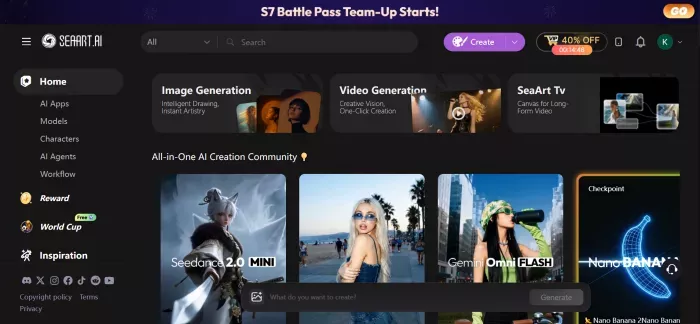

PolyBuzz is an AI character chat and roleplay platform.
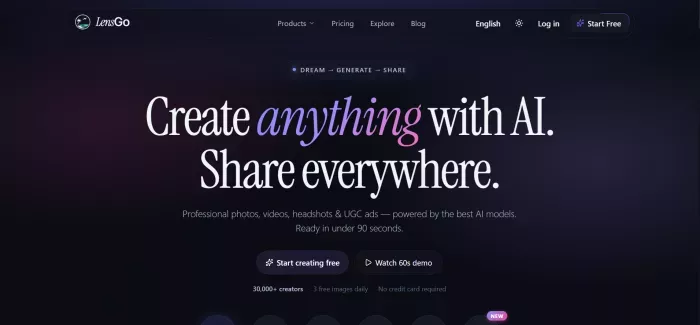
LensGo AI is a browser-based creative studio that bundles a stack of t...



Discussion