Every few years a study tool appears that claims it will change the way students learn. Most fade. A few gain a cult following. Then there are rare outliers like Jungle AI, a platform that feels less like a digital notebook and more like a personal tutor that adapts to whatever you throw at it. It pulls questions out of lecture slides, PDFs, YouTube videos, PowerPoint decks, textbooks, notes, and practically anything else a student might encounter. More importantly it does not simply convert text into flashcards. It tries to understand what a learner needs at that moment.
The result is a tool that over 1 million students now use across universities from Harvard and Princeton to UC Berkeley, UT Austin, UNSW, and schools far outside the elite bubble. Jungle AI is not trying to replace discipline or hard work. Its goal is more specific. It wants to remove the drudgery around studying so that effort actually leads somewhere.
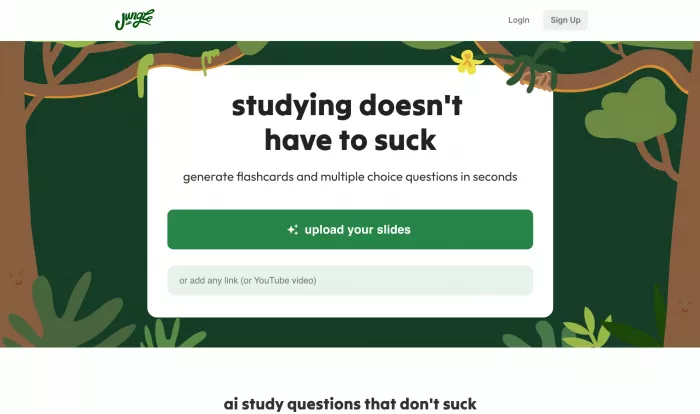
When you first land on the website the tone is surprisingly direct. Jungle AI asks whether you want study questions that do not suck. For many students this is exactly the problem. Most platforms flood learners with generic flashcards. Jungle tries to solve this through adaptive question generation that reacts to the content that you upload.
The system does three core things extremely well. It extracts concepts, transforms them into multiple choice, free response, or case based exercises, and gives personalized feedback after each answer. The feedback is not shallow. Students often describe it as miniature tutoring sessions that explain logic, offer analogies, or pinpoint what to revisit.
This is fused with a daily spaced repetition cycle similar to Anki but without the friction. The more you practice the more the platform shapes the difficulty curve. Your tree grows. Your knowledge expands. The environment feels alive.
What makes Jungle compelling is how many formats it supports. A medical student might drag a pathology slide deck into the uploader. A law student might paste a long webpage. A biology student might drop in a YouTube lecture. Within seconds the AI parses the structure and begins producing targeted questions.
The platform treats every source as raw study fuel. It is not just about copying sentences from documents. Jungle tries to identify relationships, definitions, diagrams, and the underlying logic behind the material. The experience feels closer to interacting with a teacher who just read everything you uploaded and is now quizzing you before an exam.
This saves an extraordinary amount of time. Students no longer begin studying by building their own question banks. They jump straight into practice.
Jungle has three main tiers that reflect different levels of academic intensity.
| Plan | Content Generation | Case Questions | Personalized Feedback | Anki Export |
| Free | 15 times per month | 1 per month | 5 questions per hour | Not available |
| Mega Mind | Unlimited | Unlimited | Three times more generated material | Included |
| Super Learner | Unlimited | Unlimited | Personalized feedback on every question | Included |
The free tier is surprisingly generous for casual use, although heavy exam periods push most students into the paid plans. The unlimited tiers are not simply about volume. They unlock abilities that make Jungle feel closer to a personal tutor than a study generator.

The vision of Jungle AI comes from Julian Alvarez and David Glass, supported by a team that blends AI researchers, learning scientists, and educators. Their philosophy is simple. Students learn best through deliberate practice which means attempting something, receiving feedback, closing the gap, and repeating the cycle.
This concept is well established in learning science but rarely implemented well in digital tools. Jungle uses AI to automate the heavy work required to support this feedback loop. Instead of reading entire textbooks and writing thousands of flashcards, students can focus on the parts of learning that matter.
The message across their platform is consistent. Studying does not have to suck. If effort is aligned with meaningful practice, learning feels much less painful.
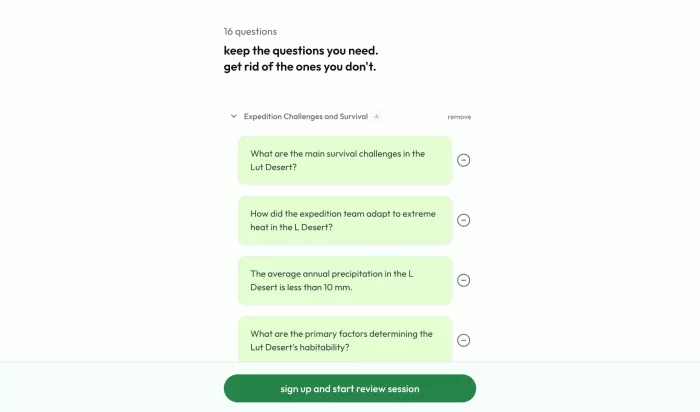

A large portion of Jungle’s success can be traced to testimonials that sound almost relieved. Students praise the quality of the questions, the speed at which they can convert lecture slides into practice sets, and the feeling of having an AI that is working with them rather than around them.
One student at the University of Miami described the generated questions as shockingly accurate. Another at St. George’s University credits Jungle with improved spaced repetition and retention across entire semesters.
There are some critiques. Students note that the free tier feels restrictive during exam season and that question generation is so convenient it becomes easy to rely heavily on it. Even so the general consensus centers on improved grades, reduced study time, and a calmer academic workload.
The academic tools landscape is crowded but Jungle distinguishes itself in several ways.

Quizlet offers flashcards but lacks multi format uploading and deep feedback.
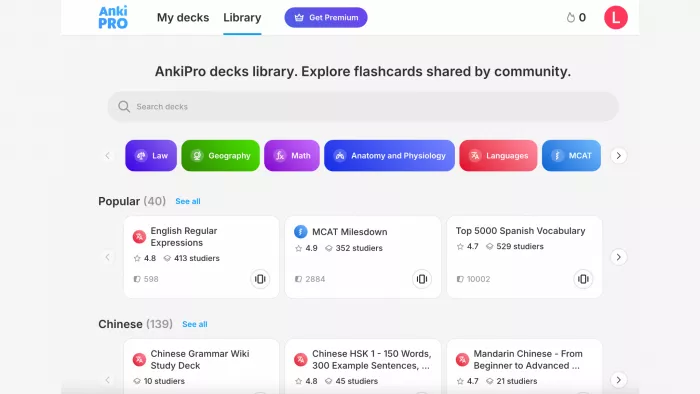
Anki remains powerful for spaced repetition but requires manual card creation.
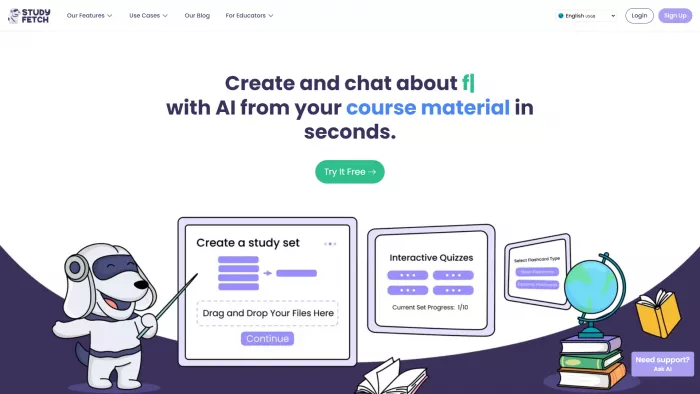
StudyFetch provides AI support but does not consistently match Jungle’s question depth or flexibility.
This positions Jungle as a hybrid platform that merges the automation of AI with structured learning science principles. It is not simply a card generator. It is a productivity engine for students who want to interact with material rather than memorize it blindly.
Many platforms attempt to gamify learning but do so in ways that feel gimmicky. Jungle takes a more symbolic approach. Each learner grows a virtual tree that responds to consistency, not streaks. The tree becomes a visual reflection of long term progress. It does not shout for attention. It sits quietly as a reminder that growth is happening.
This motivates users without overwhelming them. Academic pressure is intense enough. Jungle’s visual system provides encouragement rather than anxiety.
No tool is perfect and Jungle is no exception. Students must be cautious about outsourcing understanding entirely to AI. Flashcards and quizzes are only as strong as the effort put into interpreting the results. Jungle can accelerate learning but it cannot replace genuine comprehension.
There are also basic privacy considerations. Uploading sensitive documents should always be done with care even though Jungle maintains encrypted connections.
Still the platform is considered safe and its structure encourages ethical use. It does not promise shortcuts. It promises clarity.
Jungle AI has become one of the most influential study tools of its generation because it respects how students actually learn. It is fast, personal, and practical. It encourages repetition without monotony and understanding without intimidation. Its blend of AI generation, spaced repetition, personalized feedback, and gamification shows a new direction for academic technology.
Students often say their study time is cut in half. Others say it finally gives shape to chaotic course loads. What is clear is that Jungle does not simply add convenience. It adds structure to the entire learning journey.
If the goal is to study smarter and not just harder Jungle AI is one of the rare tools that lives up to its promise.
PixNova AI is an AI-powered creative platform designed to help users c...


PolyBuzz is an AI character chat and roleplay platform.

LensGo AI is a browser-based creative studio that bundles a stack of t...



Discussion