There are two kinds of AI platforms.
The first type works immediately. You open it, type something, and it responds. No setup, no thinking, no friction.
Chub AI is the opposite of that.
It does not try to impress you in the first five minutes. In fact, for a lot of people, the first impression is confusion. The interface feels unfamiliar, the options feel excessive, and the idea that you need to connect your own AI model just to get started raises an obvious question.
Why is this so complicated?
The answer is simple. Because it is not trying to be simple.
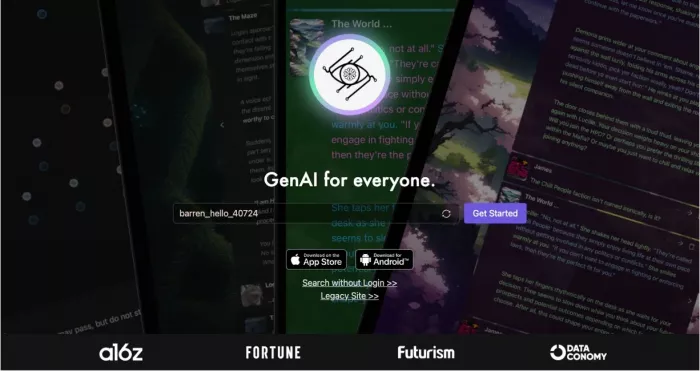
The easiest mistake people make is assuming Chub AI is like ChatGPT or Character AI.
It isn’t.
Chub does not generate anything on its own. It acts as a middle layer, connecting whatever AI model you choose to a character-based interface.
That means the quality of your experience depends on two things:
| Layer | What It Controls |
| Chub AI | Interface, characters, tools |
| External model | Intelligence, response quality |
This separation is what makes the platform powerful and frustrating at the same time.
If your setup is strong, the experience feels flexible and immersive. If it isn’t, everything feels off.
Most platforms hide complexity.
Chub AI exposes it.
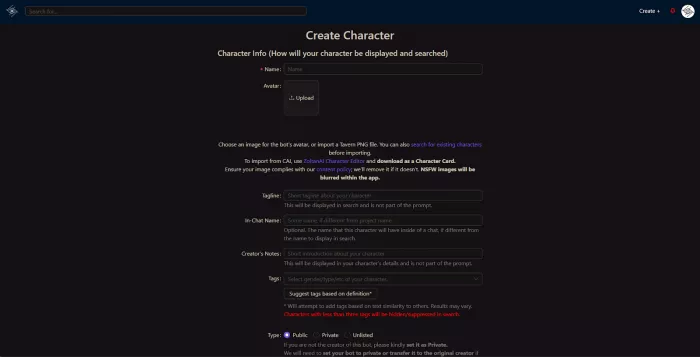
Instead of giving you a single assistant, it gives you tools to build characters with structure. Personality, tone, behavior rules, memory cues, example dialogue. All of it can be defined manually.
Then there is the concept of lorebooks.
These act as a form of injected memory. When certain keywords appear, predefined context is added into the conversation. It is how users maintain consistency across long interactions.
For example, a fictional world, a relationship dynamic, or a character trait can be stored and recalled when needed.
It works. But only if you set it up properly.

One of the main reasons people move to Chub AI is simple.
Other platforms say no.
Chub usually doesn’t.
It allows both SFW and NSFW interactions, with minimal platform-level filtering. That freedom is intentional. It is part of its identity.
But there is a catch.
Chub does not control the AI model you connect. If you use a model with strict moderation, you will still hit restrictions. If you use a more open model, the experience changes completely.
So the idea of “uncensored AI” is not entirely accurate. It is more like user-controlled filtering.
Chub AI does not feel the same for everyone.
It splits users into two very different groups.
| User Type | What They Experience |
| Beginner | Confusion, setup friction, inconsistent results |
| Experienced user | Deep control, flexible storytelling, high customization |
For beginners, the platform can feel like too much too soon. Terms like APIs, proxies, presets, and memory settings appear immediately.
For experienced users, those same tools are the reason they stay.
This divide explains why reviews feel so inconsistent. People are not using the same version of the platform. They are using different levels of it.
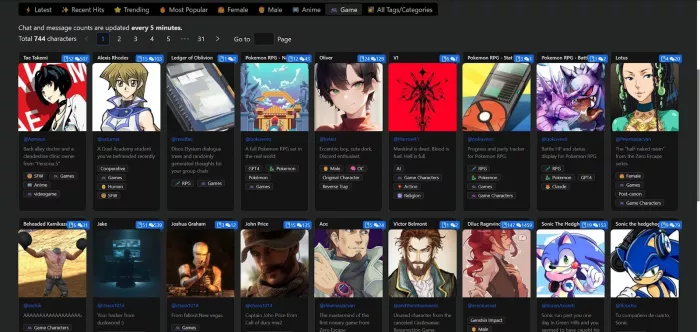
Chub AI hosts tens of thousands of community-created characters, many built for narrative interaction.
At first, this looks like a strength.
And it is.
But it also introduces a problem.
Quality varies heavily.
Some characters are detailed, structured, and consistent. Others are minimal and rely entirely on the AI model to fill in gaps.
| Character Type | Build Quality | Consistency | Best Use Case |
| Fully built characters | Detailed personality, structured behavior | Stable early, slight drift over time | Immersive roleplay, story-driven chats |
| Semi-structured characters | Basic traits with partial setup | Noticeable drift after a few messages | Casual interaction, light scenarios |
| Basic templates | Minimal definition, AI fills gaps | Highly inconsistent | Quick testing, experimentation |
| Incomplete builds | Poor or missing structure | Breaks quickly or behaves unpredictably | Exploration only |
This inconsistency is not a bug. It is a result of the platform being community-driven rather than curated.
Chub AI did not appear out of nowhere.
It was formed by combining Venus AI and CharacterHub, merging roleplay interaction with a large character database.
That history explains a lot.
The platform feels less like a polished app and more like a collection of systems layered together.
You have:
Individually, these are powerful. Together, they require effort to manage.
This is why some users describe it as a creative engine, while others see it as unnecessarily complicated.
At surface level, Chub AI is free.
You can browse characters, run chats, and explore the platform without paying.
But that is only part of the picture.
| Cost Layer | What You Pay For |
| Chub platform | Optional subscription (~$5/month) |
| AI model | Token-based usage (varies) |
The platform itself is affordable.
The real cost depends on the model you connect. If you use premium APIs, costs scale with usage.
So while entry is easy, long-term use is not truly free.

Chub AI’s biggest strengths are also its biggest weaknesses.
The same flexibility that allows deep customization also introduces instability.
Users commonly report:
None of these issues are unique to Chub, but they are more visible because the platform pushes users toward long-form, complex interactions.
Instead of ranking platforms, it is more useful to understand how they differ in philosophy.
| Platform | Core Focus | Ease of Use | Customization | Memory Reliability | Overall Experience |
| Character AI | Stability & safety | Very easy | Moderate | Strong (short-term) | Controlled and predictable |
| Janitor AI | Flexibility & control | Moderate | High | Depends on setup | Customizable but technical |
| Joyland AI | Story-driven interaction | Easy to start | Moderate | Inconsistent over time | Creative but unstable |
| Chub AI | Full control & system depth | Difficult initially | Very high | Model-dependent | Powerful but demanding |
Chub does not try to compete on simplicity.
It competes on control.

The better question is whether you are willing to meet it halfway.
Chub AI does not deliver a finished experience out of the box. It gives you the pieces and expects you to build something with them.
For some users, that is exactly what they want.
For others, it feels like unnecessary effort.
Chub AI is not broken. It is just demanding.
It gives you more control than most platforms, more flexibility in how conversations behave, and more freedom in what you can create.
But it also asks for more in return.
Time, patience, and a willingness to understand how the system works.
That trade-off defines the entire experience.
Chub AI does not behave like something you can simply open and immediately understand. It expects input, adjustment, and a bit of trial before it starts to feel right.
The experience improves when you stop expecting instant results and start shaping how it responds. The more effort you put into configuring characters, memory, and model behavior, the more the system begins to align with what you want.
That shift is what defines the platform.
It is not built for convenience. It is built for control.

a place where users could create interactive characters, explore long...

A detailed Luminarbrush.ai review based on real usage, exploring its l...

Dopple AI is not trying to be a productivity tool or a general assista...

An AI system that trades across multiple markets and generates passive...

designed specifically for hospitals, clinics, and healthcare networks...

Akool is one of the few platforms that actually bridges that gap, and...

Discussion