For more than two decades, Google Search worked in essentially the same way. Users typed questions, Google returned links, and humans did the actual work of reading, comparing, filtering, summarizing, and making decisions.
At Google I/O 2026, the company made it clear that era is starting to end.
Google’s newest AI agents are designed to move far beyond traditional search results. Instead of simply pointing users toward information, the company now wants Gemini-powered systems to actively perform research, analyze options, organize findings, and even complete multi-step tasks on behalf of users.
The shift represents one of the biggest transformations in Google Search history, and it fundamentally changes what “searching the internet” may look like in the future.
The center of the rollout is Google’s new “AI Mode,” a conversational search environment powered by Gemini.
Unlike classic search, AI Mode allows users to interact with Google through extended back-and-forth conversations. Instead of entering fragmented keywords, users can now ask highly detailed, layered, contextual questions in natural language.
Someone planning a vacation, for example, no longer needs to manually open dozens of tabs comparing hotels, flights, local transit, weather, attractions, and reviews individually.
A user can instead ask:
“Plan a 7-day Japan trip under $4,000 with good public transit, anime shopping areas, and quieter cities outside Tokyo.”
Gemini then performs multiple searches simultaneously, synthesizes information across sources, compares options, generates recommendations, and continues refining results through conversation.
The experience increasingly resembles interacting with a research assistant rather than using a traditional search engine.
What makes the system different from earlier chatbot integrations is its ability to manage layered workflows autonomously.
Google demonstrated AI agents capable of:
Instead of forcing users to manually repeat searches one by one, Gemini can maintain context continuously while branching across multiple tasks simultaneously.
The company says this is powered by what it calls “query fan-out,” where AI agents launch many searches in parallel behind the scenes before combining results into unified responses.
The philosophical shift behind the rollout is important.
Google no longer appears to see search as primarily a retrieval tool.
It increasingly sees search as task delegation.
That means users are gradually moving from asking “Where can I find this information?” toward “Can you handle this for me?”
This difference sounds subtle, but it fundamentally changes the role of AI inside search engines.
Instead of optimizing only for ranking webpages, Google is now optimizing for autonomous task completion.
That transition could reshape everything from SEO and publishing to e-commerce and online advertising.
One major advantage Google has over many standalone AI startups is ecosystem integration.
The new AI agents can connect with products including Gmail, Calendar, Maps, Docs, Drive, YouTube, Shopping, Android, and Chrome.
That allows Gemini to operate with significantly more context than a normal chatbot.
For example, a user asking about travel plans could theoretically allow Gemini to:
The broader goal is increasingly clear: Google wants Gemini to function less like a chatbot and more like a universal digital operating layer.
The rollout also creates major implications for websites, publishers, and creators.
Traditional Google Search sent users outward toward external websites where publishers earned traffic, ad revenue, and engagement. AI agents increasingly compress that process by summarizing information directly inside Google’s own interface.
That raises growing concerns across media and publishing industries about declining referral traffic and reduced visibility for original content creators.
If users receive synthesized answers without clicking links, large parts of the existing search economy may eventually change dramatically.
At the same time, Google argues AI agents could create entirely new discovery patterns by helping users explore deeper and more complex questions than traditional search ever handled effectively.
What Google demonstrated at I/O suggests the company is moving toward something much larger than AI search summaries.
The long-term vision appears centered around persistent AI systems capable of continuously helping users navigate information, decisions, workflows, and digital tasks throughout the day.
Search becomes only one layer inside that broader assistant ecosystem.
Google’s AI agents are increasingly being designed to remember context, maintain continuity across sessions, understand personal preferences, and proactively assist users across devices and applications.
That moves Google closer to the same destination many major AI companies are chasing: building a universal AI assistant deeply embedded into everyday life.
Perhaps the most important shift is not technical, it is behavioral.
People are slowly learning to interact with AI systems differently than they interacted with traditional software.
Instead of carefully crafting keywords, users are beginning to think conversationally, strategically, and delegatively. They increasingly expect AI to interpret intent, handle ambiguity, and complete work autonomously rather than simply returning data.
Google’s new AI agents accelerate that transition significantly.
And if the company succeeds, future generations may look at old-style keyword search the same way modern users look at dial-up internet: an earlier phase of computing that suddenly feels primitive once something more capable arrives.

a place where users could create interactive characters, explore long...
A detailed Luminarbrush.ai review based on real usage, exploring its l...
Dopple AI is not trying to be a productivity tool or a general assista...

An AI system that trades across multiple markets and generates passive...

designed specifically for hospitals, clinics, and healthcare networks...
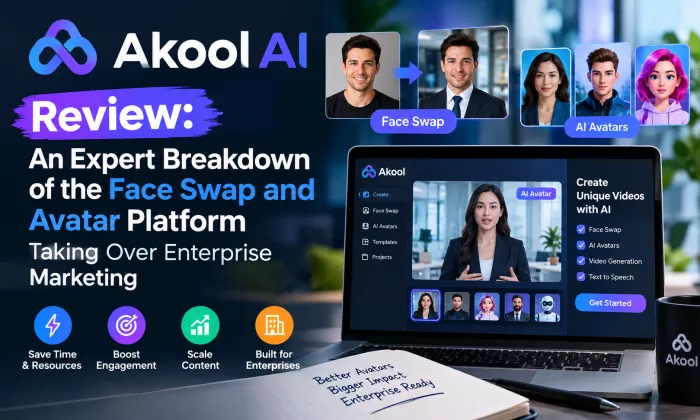
Akool is one of the few platforms that actually bridges that gap, and...

Discussion