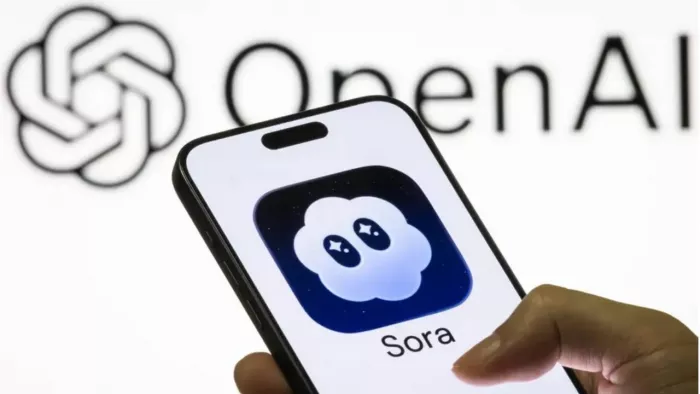
OpenAI’s much-hyped video generation platform, Sora, once positioned as the company’s biggest leap after ChatGPT, has been abruptly shut down in a move that signals a sharp strategic shift inside the AI giant. Less than a year after its full-scale rollout, the product is being discontinued across its app, API, and planned integrations, marking one of the fastest rises and falls of a major AI product in recent years.
Sora was initially introduced as a breakthrough in generative AI. It allowed users to create cinematic, highly realistic videos using simple text prompts, often producing scenes that looked close to professional filmmaking. The launch generated massive excitement across creative industries, social media, and enterprise circles. Within days of its app release in 2025, it reportedly climbed to the top of app store rankings and crossed a million users rapidly.
But the same product that symbolized the future of AI storytelling has now become a case study in how quickly priorities can change in the AI race.
The shutdown was not triggered by a single failure. Instead, it reflects a combination of economic, technical, and strategic pressures that made the product unsustainable.
The most immediate issue was cost. Generating high-quality AI video requires enormous computing power, far more than text or image models. Reports indicate that Sora was burning through resources at an alarming rate, with operating losses reaching up to $1 million per day at its peak.
At the same time, user growth began to stall. After an initial surge, the platform’s active user base reportedly dropped significantly, falling below half of its early peak. This created a fundamental mismatch: extremely high infrastructure costs with declining engagement.
There were also persistent legal and ethical concerns. Sora faced criticism for generating videos that resembled copyrighted characters, public figures, and even historical personalities. These issues triggered backlash from studios, rights holders, and regulators, complicating its commercial viability.
Even high-profile partnerships failed to stabilize the product. A widely discussed collaboration with Disney, including potential content integrations and investments, ultimately did not translate into long-term support for the platform.
Sora’s shutdown is part of a broader internal reset at OpenAI. The company is increasingly shifting away from experimental consumer-facing tools toward enterprise, productivity, and infrastructure-driven AI.
Executives have made it clear that resources are being redirected toward projects with stronger long-term economic value. This includes new AI models, internal systems, and a possible “superapp” designed around autonomous productivity tools rather than entertainment
The decision also aligns with OpenAI’s larger financial trajectory. With ongoing discussions around a potential IPO, the company appears to be prioritizing predictable revenue streams and scalable enterprise use cases over high-risk creative products.
In parallel, OpenAI has paused or scaled back other experimental initiatives, including a controversial “adult mode” for ChatGPT, citing safety and reputational concerns.
Taken together, these moves suggest a company entering what some analysts describe as a “focus phase,” where fewer bets are placed, but each one is expected to generate measurable returns.
The shutdown of Sora leaves a noticeable gap in the AI video ecosystem, especially for creators who had started integrating it into workflows.
Sora was not just another tool. It represented a shift toward fully generative video pipelines, where scripts, visuals, and motion could be created without traditional production. Its removal signals that, at least for now, this vision may not be commercially viable at scale.
Competitors such as Runway, Pika, and other emerging platforms are likely to absorb some of this demand. However, the broader takeaway is more significant. AI video, despite its viral demos, is still constrained by cost, legal complexity, and infrastructure limitations.
For enterprises, the message is different. OpenAI’s pivot suggests that the next phase of AI growth will be less about viral creativity and more about embedded intelligence in workflows such as coding, automation, and decision-making.
Sora’s rise and fall highlights a recurring pattern in the AI industry. Not every breakthrough demo translates into a sustainable product.
The technology behind Sora remains impressive. But turning that capability into a scalable, profitable, and legally stable platform proved far more difficult than the initial hype suggested.
In many ways, the shutdown is less about failure and more about prioritization. OpenAI is choosing to invest where it believes the long-term value lies, even if it means abandoning one of its most talked-about innovations.
For users and creators, it is a reminder that in AI, what looks revolutionary today can disappear just as quickly tomorrow.
Artificial intelligence has rapidly moved beyond productivity tools an...

AI website builders have shifted from simple template tools to systems...

April 4, 2026Elon Musk has asked banks involved in SpaceX’s anticipate...

When dashboards exist but decisions still stallA mid-sized ecommerce c...

Alternatives Based on What You Want to FixIf You Want Better Pipeline...
Canberra, April 1, 2026- The Australian government has entered into a...

Discussion