Meta Platforms has significantly increased its investment in a West Texas AI data center, raising the total planned spending to more than $10 billion. The revised figure marks a sharp jump from its earlier commitment of roughly $1.5 billion and reflects the company’s accelerating focus on building large-scale infrastructure to support artificial intelligence.
The facility, located in El Paso, is expected to reach approximately 1 gigawatt of computing capacity by 2028. At that scale, it would rank among Meta’s largest data center projects globally and position the company to handle growing demand for AI model training and deployment. The site is also expected to generate thousands of construction jobs during development and create several hundred permanent roles once operational.
The expansion comes as competition intensifies among major technology firms investing in AI infrastructure. Companies such as Amazon, Microsoft, and Alphabet are committing substantial capital toward data centers, chips, and networking systems needed to power advanced AI models. Industry-wide spending in this space has surged as companies race to secure the computing capacity required to stay competitive.
Meta’s move highlights a broader shift in the AI landscape. Earlier phases of AI development were largely focused on improving algorithms and model capabilities. Increasingly, however, the limiting factor is infrastructure. Training modern AI systems requires vast clusters of high-performance hardware, supported by reliable energy and cooling systems. Without sufficient capacity, even the most advanced models cannot be scaled effectively.
Texas has become a key hub for such projects, offering advantages in land availability, energy access, and regulatory processes. These factors make it particularly suitable for building large, energy-intensive data centers. Meta has indicated that the West Texas facility will be supported by significant clean energy commitments, adding thousands of megawatts of renewable power to the grid to meet operational needs.
The company’s decision to expand investment also comes amid broader cost adjustments across its business. While Meta has reduced spending in certain areas and restructured parts of its workforce, it continues to prioritize AI as a long-term growth driver. The scale of this investment suggests that infrastructure is central to that strategy.
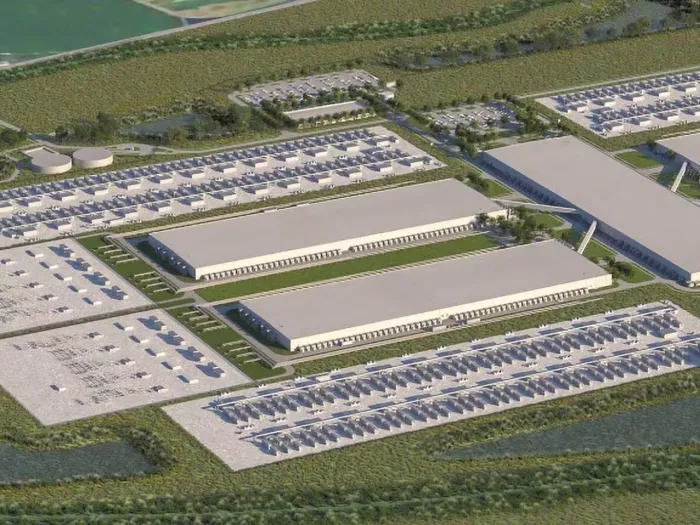
Beyond its technical implications, the project is expected to have a measurable economic impact on the region. Large data center developments typically bring increased demand for local services, supply chains, and infrastructure support. However, they also raise questions about energy consumption and resource management, particularly in areas where environmental conditions can be sensitive.
The expansion underscores a key reality in today’s AI industry. Competitive advantage is no longer defined solely by software innovation. It increasingly depends on who can build and operate the largest, most efficient computing systems. By scaling its West Texas data center investment to $10 billion, Meta is reinforcing its position in a rapidly evolving sector where infrastructure plays a decisive role.
As demand for AI capabilities continues to grow across industries, investments of this magnitude are expected to become more common. For Meta, the Texas project represents not just an expansion, but a strategic commitment to the physical foundations of artificial intelligence.

The First Few Minutes on the Site Tell You a LotWhen I first landed on...

Fraud has evolved alongside technology. What was once limited to paper...
SoftBank Group has secured a $40 billion loan from a consortium o...

Recent advances in neural networks and large language models have sign...

There is a quiet shift happening inside AI chat platforms, and it has...

One tool gaining attention among programmers is Blackbox AI. Rather th...

Discussion