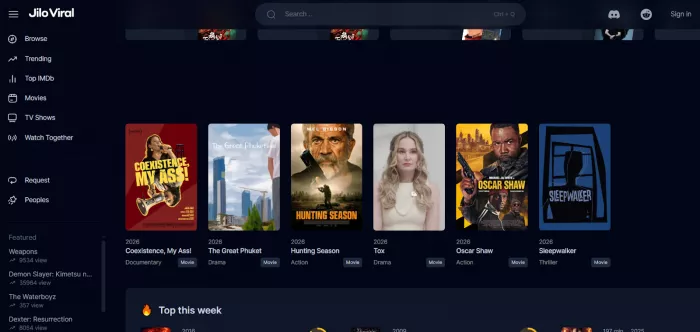
JiloViral.com emerges as a streaming destination that mimics mainstream platforms while relying on unlicensed access to movies and TV shows. The site’s interface looks like a modern OTT service, but its operational patterns, rotating domains, and catalog behavior align more closely with long‑running piracy sites.
Users arrive expecting “free Netflix‑style” access, and that is roughly what they encounter: click‑to‑play movies and series, no login required, and a visually polished, thumbnail‑heavy homepage. What remains invisible on the surface is the absence of clear licensing, company disclosure, or stable legal footing behind the streams.
JiloViral’s front end feels familiar if you’ve used any mainstream streaming app. Rows of titles, category filters, and search give the sense of an organized library rather than a grab‑bag file index.
Typical content buckets include:
Alongside the streaming site, a related domain (jiloviral.com.in) hosts SEO‑oriented blog content around tech and search topics, suggesting a parallel attempt to build search authority and traffic outside of pure streaming.
| Category | Example signals | Primary intent |
| Movies (Hollywood/Bollywood) | Large, fast‑loading film library | Entertainment, SEO‑driven |
| TV shows / series | Users streaming seasons like “Invincible” | Entertainment, SEO‑driven |
| Anime / cartoons | Dedicated navigation category | Entertainment, SEO‑driven |
| Genre filters (action etc.) | Standard OTT‑style menus and filters | UX parity with OTT, engagement |
| SEO / tech blog (.com.in) | Posts on “Blog SEO” and digital topics | SEO, informational (separate) |
The unifying thread is a catalog optimized to catch trending searches (“watch [movie] free”) rather than to curate or critique cinema as an art form.
Looking at traffic and ranking data, JiloViral.com is not a fringe experiment; it is a high‑scale site with global reach. Estimates for late 2025 show hundreds of thousands of monthly visits, historically crossing the million‑visit mark.
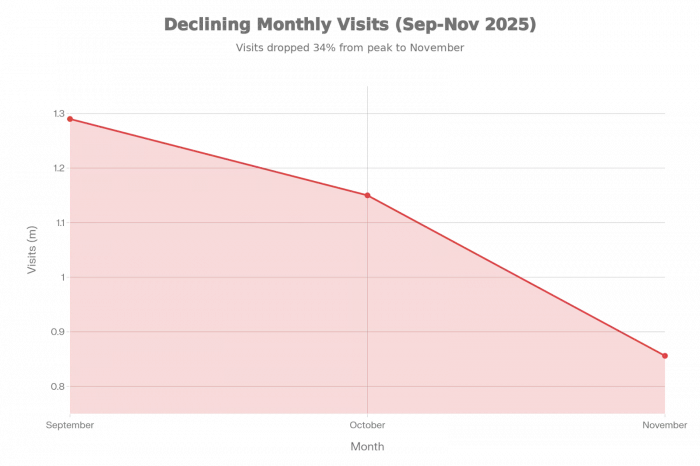
Monthly visits dropped from about 1.29M in September 2025 to 0.856M in November 2025, still a large audience by any measure.
Global ranks in the tens of thousands and a strong US ranking place it among significant entertainment destinations, particularly for users seeking free streams.
The core audience is concentrated in the United States, India, and the United Kingdom, with most visits arriving directly rather than via search.
A simple way to visualize the recent traffic trend is a declining line from September to November 2025, reflecting both content cycles and possible blocking or domain issues.
Top keywords are overwhelmingly branded: “Jilo viral” and “jiloviral” account for the bulk of organic search traffic. This suggests a user base that already knows the name and types it into Google or the address bar, rather than stumbling across the site while browsing movie reviews.
Around major releases, Marvel films, big Bollywood titles, and similar cultural moments the catalog and traffic both spike. Title pages are likely generated from templates that pair a specific movie or episode name with “watch free” style metadata, a pattern typical of programmatic piracy SEO.
From a user’s point of view, JiloViral.com is designed to minimize friction between arrival and viewing. There is no account creation, no subscription wall, and no visible pay‑per‑view mechanism.
A typical journey looks like this:
Several factors help explain repeat visits:
At the same time, instability and trust concerns lagging streams, buffering, and domain changes encourage some users to treat JiloViral as a backup solution rather than a primary, dependable service.
Where JiloViral becomes most complex for users is not in how it looks, but in how it is run.

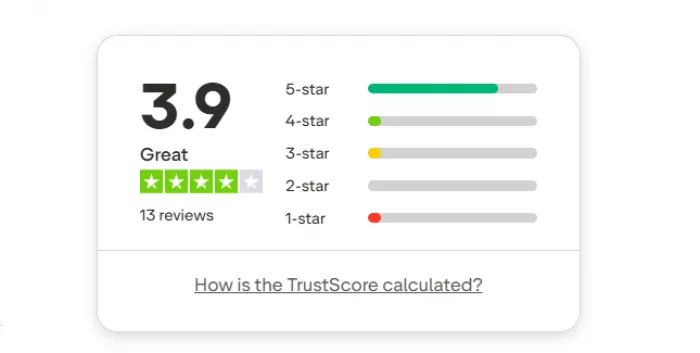
User reviews and external scans paint a mixed but concerning picture:
| Dimension | Observed signals | Indicative level |
| Ownership clarity | No clear company or owner publicly identified | Low |
| Licensing clarity | Evidence of unlicensed streams, no visible rights info | Very low |
| User sentiment | Positive on UX/content; mixed on buffering and glitches | Moderate on experience |
| Safety profile | Pop‑ups, redirects, prior phishing associations | High risk |
| Longevity pattern | Rotating domains, meme‑like presence, recurring traffic | Volatile but persistent |
For anyone considering or already using JiloViral, the most practical stance is to be clear‑eyed about what the site is and is not.
What it offers in real terms:
Where caution is warranted:
JiloViral.com behaves like a polished, free alternative to mainstream streaming, but it is built on foundations that are opaque, unstable, and legally questionable. For cost‑conscious viewers, it can function as a convenient shortcut, yet it is best treated as a high‑risk, supplementary option that users approach with realistic expectations about safety, legality, and longevity rather than as a trusted cornerstone of their entertainment setup.

AI-powered image editing has moved far beyond simple filters. Today’s...

AI chat platforms built around fictional characters and roleplay conve...
AI chat platforms have evolved far beyond simple question-and-answer b...
Platform OverviewCutout.pro is an AI-powered image editing platform de...

AI chat platforms designed for roleplay and interactive conversations...
Goth AI is a character-based AI chat platform designed for dark, gothi...

Discussion