In late 2025, Google’s viral image tool nicknamed “Nano Banana” turned the Gemini app into an everyday photo studio. People used it to create figurines, restore old images, swap backgrounds, and generate shockingly realistic edits with a simple prompt. But the same thing that makes Nano Banana feel “magical” also makes it politically and socially sensitive: it touches the most personal dataset most people have their photo libraries.
That’s why a fresh wave of privacy anxiety is spreading around a number often attached to the controversy: 1.5 billion users. The figure is being discussed in the context of Google Photos’ enormous global footprint and the scale of Google’s consumer AI rollout, where even a small policy misunderstanding can become a billion-user trust problem.
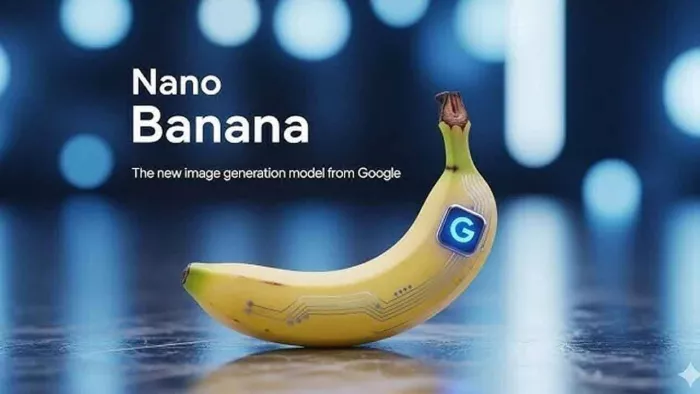
“Nano Banana” is Google’s name for Gemini’s native image generation and photo-editing capability, offered through Gemini’s consumer experience and also exposed via the Gemini API. In simple terms, it’s the model layer that lets Gemini create images from text and edit images you upload.
Google later introduced Nano Banana Pro, positioning it as a more advanced model with tighter control and better output quality (including improved text rendering, higher resolution, and deeper integration across Google products).
Why the privacy debate reignited now

The current flare-up didn’t begin with a regulator or a leak — it began with a public accusation.
A post from Proton (a privacy-focused company and cloud-storage competitor) claimed that Google’s AI image quality exists because Google is effectively “scanning” Google Photos libraries at massive scale. The claim itself did not include evidence, but it moved fast because it hit a fear many users already carry: “Are my personal photos silently training someone’s AI?”
Google’s response is important because it draws a line between Photos as a product and AI training across Google’s wider generative AI stack.
Google has denied training its broader generative AI models (including other Gemini products) on your personal Google Photos content. The language is consistent across coverage and Google’s own Photos privacy materials: “We don’t train any generative AI models outside of Photos with your personal data in Photos.”
But Google also acknowledges a separate, uncomfortable truth: Google Photos is not end-to-end encrypted, and photos stored there can be scanned for specific safety purposes like detecting child sexual abuse material (CSAM). That means “not used for AI training” does not automatically equal “never analyzed.”
This nuance is where public trust often collapses — because most users don’t distinguish between:
● content scanning for safety/compliance,
● content processing to provide a feature, and
● content used to train or improve models.
All of these can involve “AI,” but they carry very different privacy meanings.

Even if Google’s policy is exactly as stated, the real headline is scale.
Google’s AI products already operate at billion-user levels. For example, Google’s AI Overviews in Search is reported to be used by more than 1.5 billion users monthly across 100+ countries.
Now add a viral consumer tool (Nano Banana) that encourages people to upload:
● selfies,
● children’s photos,
● family albums,
● documents/receipts,
● home interiors,
● personal locations and routines.
Android Central reported Google credited Nano Banana with 10 million+ new Gemini users and 200 million+ images edited in a short window — a sign of just how quickly sensitive media can flow into an AI pipeline when the UX is frictionless.
When this happens at scale, the privacy question becomes less about one feature and more about a societal shift: AI is becoming the default interface to personal memory.
Even if you accept Google’s “not training outside Photos” statement, the modern privacy debate has expanded. People worry about:
1) Secondary use and policy complexity
Users fear “policy drift” — rules that are clear today but expand tomorrow. TechRepublic highlighted how long, complex policies reduce real consent, because most people never read them until there’s a scandal.
2) Sharing pathways
Google says if you choose to share a photo from Google Photos into another Google product or a third-party service, the content is processed under that other service’s policies. That’s logical — but it means privacy depends heavily on which button you press and which integration you enable.
3) Metadata is often more revealing than pixels
Even if a company “doesn’t train,” it may still process: timestamps, device info, location hints, face clustering, relationships, and objects in scenes — all of which can create powerful inferences.
4) Deepfakes and social harm
A tool that makes it easy to generate realistic images also makes it easier to forge “proof” — edited receipts, injury photos, accident images, identity documents, and more. Concerns like this have already appeared in public discussion around Nano Banana’s viral trends.
Why this matters more in India and other high-growth markets
India is one of Google’s biggest markets for Android and consumer AI. And regulators are tightening expectations around consent and minimization.
Reuters reported that India put new privacy rules into force in November 2025 under the DPDP framework — emphasizing that companies should collect only what is necessary for a specific purpose and give users clearer control (including opt-out) and breach notifications.
So for Indian users, the Nano Banana debate isn’t abstract. It sits at the intersection of:
● viral AI features,
● mass photo storage habits,
● rising deepfake risk,
● and a privacy regime that’s becoming more operational.
If you use Google Photos + Gemini, here are realistic moves that improve privacy without killing convenience:
1. Separate “storage” from “AI editing” mentally
Treat AI editing like sending a file to a tool not like browsing your private album locally.
2. Check Photos privacy controls and Gemini/Photos settings
Google has a dedicated Photos privacy hub explaining how generative AI training relates to Photos content. Use it as the source of truth for Google’s stated policy.
3. Be careful with sensitive categories
Avoid uploading: children’s images, IDs, medical documents, financial screenshots, or anything you wouldn’t want circulating if leaked.
4. Use end-to-end encrypted alternatives for your most private albums
For the subset of photos that truly must be private, consider services designed around encryption and zero-knowledge principles (even if it costs convenience).
Nano Banana is not just a fun model with a silly name. It’s a sign that AI is becoming the default way people edit and reinterpret personal life and that pushes privacy from a “settings page” issue into a public trust issue.
When a tool can pull in tens of millions of users and process hundreds of millions of images quickly, the bar for transparency has to rise too. Otherwise, every viral AI feature will come with the same shadow headline: “What did I just give away and did I really mean to?”
AI-powered image editing has moved far beyond simple filters. Today’s...
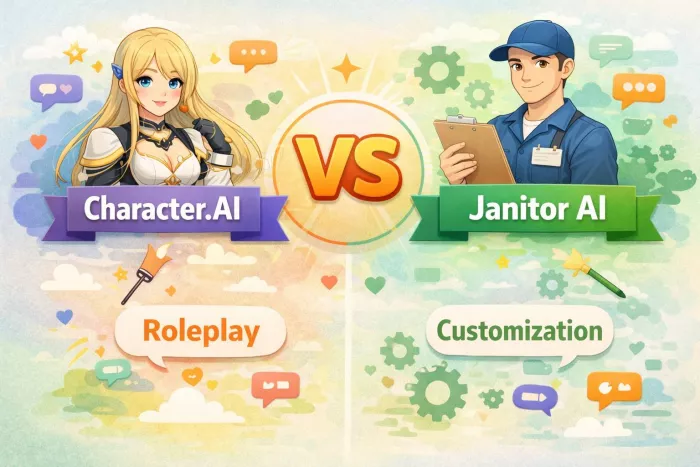
AI chat platforms built around fictional characters and roleplay conve...
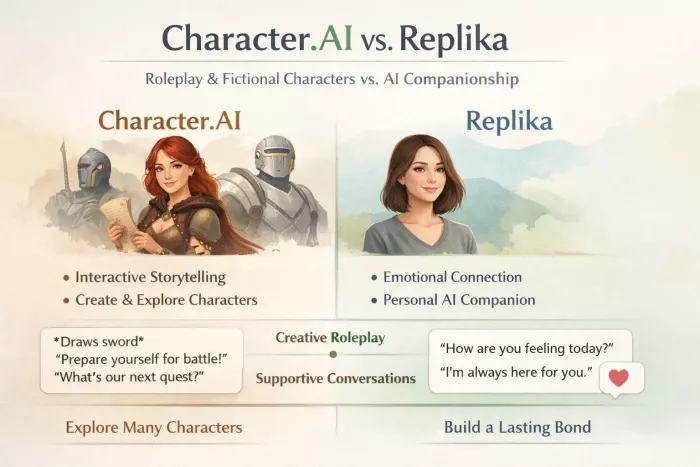
AI chat platforms have evolved far beyond simple question-and-answer b...
Platform OverviewCutout.pro is an AI-powered image editing platform de...

AI chat platforms designed for roleplay and interactive conversations...
Goth AI is a character-based AI chat platform designed for dark, gothi...

Discussion