Google is rolling out Gemini for Home as its next-generation AI assistant on smart speakers and displays in the US, replacing much of what Google Assistant did while adding far more conversational, contextual, and automation-heavy capabilities. For US users, this marks one of the biggest overhauls of the Google smart home ecosystem since Assistant first arrived on Nest and Google Home devices.
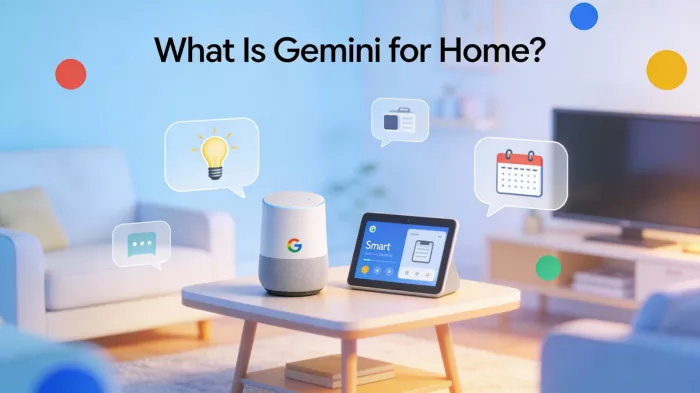
Gemini for Home is a home‑focused version of Google’s Gemini AI, tuned specifically for smart speakers, displays, cameras, and other connected devices around your house. Rather than being a simple command-and-response bot, it is designed as an ambient, reasoning assistant that can understand context, follow multi-step instructions, and hold natural conversations with multiple people in the household.
Under the hood, Gemini for Home uses the same large language model family that powers Google’s broader Gemini assistant on mobile and web, but with custom capabilities for device control, camera understanding, and home automation. The result is an assistant that can bridge traditional smart home control (“turn off the kitchen lights”) with far more open‑ended tasks like brainstorming, coaching, or step‑by‑step guidance (“help me plan a low‑budget, vegetarian dinner week”).

Gemini for Home is not appearing everywhere at once; instead, Google is using a staged rollout centered on early access in the United States. Google began offering early access to selected US users with compatible Nest and Google Home speakers and displays, with invitations managed through the Google Home app and related opt‑in programs.
During this early phase, Gemini for Home effectively replaces Google Assistant on supported devices once users enroll, and there is currently no simple path to revert back to the classic Assistant experience. Google has also signaled that, while the core Gemini for Home capabilities will be available at no extra cost, more advanced features are bundled into a paid Google Home Premium subscription, which is being positioned as the tier for power users and heavy camera/security usage.
The biggest shift with Gemini for Home is in how you talk to it and what it can do once you start a conversation. While the wake phrase remains familiar (“Hey Google”), the interaction model is far less rigid: users can chain multiple actions, ask follow‑ups without repeating context, and interrupt responses to refine what they’re asking for.
From a capability perspective, Gemini for Home leans heavily on reasoning and context:
● It can execute multi-device, multi-condition requests such as “dim the living room lights, set the thermostat to 72, and pause the TV when the kids’ tablets disconnect from Wi‑Fi.”
● It can act more like a household coordinator, helping create or adjust calendars, lists, reminders, and timers in conversation instead of one command at a time.
● It supports a mode sometimes referred to as Gemini Live in the home context, where users can have extended, expert-style back‑and‑forth chats without repeatedly saying the wake phrase.
For existing Google Assistant users, the practical impact is that the system is moving away from “command grammar” toward natural, messy human language. This is particularly noticeable when dealing with exceptions (“turn off all the lights except the bedroom”) or conditional instructions (“if no one is detected in the living room after 10 p.m., turn everything off”).
On the surface, Gemini for Home still handles familiar tasks like:
● Playing music, podcasts, or streaming content on TVs and speakers
● Checking the weather, quick facts, unit conversions, or sports scores
● Managing alarms, timers, and simple reminders
However, its differentiation becomes obvious in more complex or open‑ended situations:
● Brainstorming and planning: Gemini can co‑create grocery lists based on recipes, suggest weekly meal plans, or draft a vacation itinerary with constraints like budget, weather, or dietary preferences.
● Learning and coaching: It can walk users through DIY tasks, practice difficult conversations, or break down complex topics for kids or adults in a more tutor‑like fashion.
● Multi‑step workflows: Instead of triggering one routine at a time, Gemini can chain actions on the fly based on your description, without forcing you to pre‑build every scenario as a static routine.
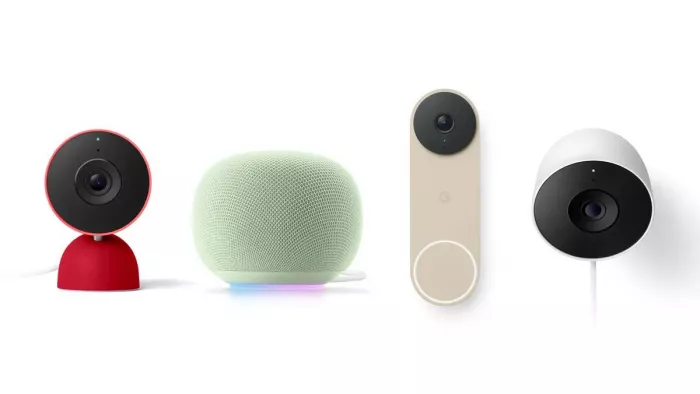
One of the most disruptive aspects of Gemini for Home, particularly for US early adopters, is how deeply it ties into Nest cameras, doorbells, and third‑party partner devices. Google is framing this as a move from passive, notification‑driven security to a more conversational, query‑driven understanding of what is happening around your home.
For example, with compatible cameras and a qualifying subscription, users can ask things like:
● “Did any packages arrive on the porch yesterday?” instead of scrubbing through footage manually.
● “Has the backyard gate been opened since 3 p.m.?” to quickly check for events across multiple cameras.
● “Did anyone take the dog out this morning?” where the system infers the answer by analyzing relevant clips.
On top of that, Gemini for Home can generate activity summaries, turning raw event logs into human-readable reports of what mattered over a given period, such as overnight or while you were away. This makes cameras feel less like isolated sensors and more like parts of a broader, question‑answering home monitoring fabric.
Google is also opening Gemini for Home integration to partner hardware through new programs and APIs so that third‑party cameras and devices can plug into the same understanding layer. The ambition is to create a heterogeneous ecosystem where users are not locked into a single vendor’s hardware to get AI‑level context and summaries.
Gemini for Home introduces a more explicit monetization structure compared with the older Google Assistant model. At a high level, Google appears to be splitting features into:
● A free tier that includes the basic Gemini for Home upgrade on compatible devices, conversational controls, and most day‑to‑day assistant capabilities.
● A paid Google Home Premium tier that unlocks advanced camera understanding, extended history search, Gemini Live‑style conversational sessions at home, and more sophisticated automation features.
Reports suggest that premium pricing is positioned as a monthly subscription targeted at users who lean heavily on security, monitoring, or deeper AI assistance in the home context. This aligns with a broader industry pattern where AI‑enhanced services are layered on top of existing hardware as recurring revenue rather than one‑off device purchases.
For US households, this means the Gemini for Home rollout is not just a technical upgrade but also a nudge to pick a tier: living with the substantially improved free experience, or paying to unlock the full spectrum of AI‑driven security and automation. Over time, this split may also influence how third‑party partners design their devices and services around the Google ecosystem.
Gemini for Home is more than just another smart speaker update; it is Google’s attempt to turn the entire home into a context-aware digital collaborator that understands people, devices, and routines as a connected system. By combining natural conversation, multi-step reasoning, and deep integration with Nest hardware and partner ecosystems, it shifts the experience from issuing isolated commands to orchestrating fluid, real-world tasks across security, entertainment, and daily life. For US households, the staged rollout and free‑plus‑premium model create a clear fork: enjoy a significantly more capable default assistant or lean into paid tiers that treat cameras, sensors, and automations as an intelligent, queryable layer over the physical home. How quickly users adopt Gemini for Home and how well Google balances privacy, reliability, and subscription value will determine whether this becomes the new baseline for ambient AI in the home or just the first draft of a much larger shift in domestic technology.

AI-powered image editing has moved far beyond simple filters. Today’s...
AI chat platforms built around fictional characters and roleplay conve...
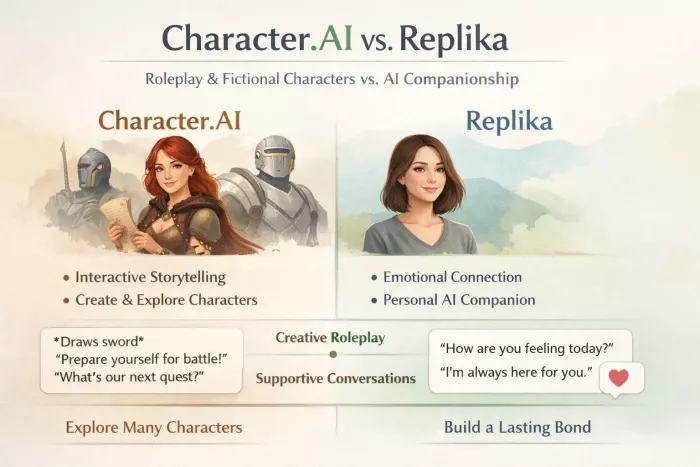
AI chat platforms have evolved far beyond simple question-and-answer b...

Platform OverviewCutout.pro is an AI-powered image editing platform de...

AI chat platforms designed for roleplay and interactive conversations...

Goth AI is a character-based AI chat platform designed for dark, gothi...

Discussion