Elon Musk is transforming xAI’s Colossus campus in Memphis from a fast‑built AI supercomputer into what is effectively a 2‑gigawatt, three‑site “AI power plant,” positioning it as one of the most energy‑hungry data center complexes on the planet. The expansion is not just about adding servers; it is about building a vertically integrated compute, power and cooling ecosystem designed to chase Musk’s stated goal of having “more AI compute than everyone else.”
Most hyperscale AI data centers today operate in the low hundreds of megawatts; Colossus is being scaled toward an order of magnitude more.
● Current phases run in the “hundreds of megawatts,” with a roadmap that takes total campus capacity beyond 2 GW as Colossus 2 and the new site come online.
● At 2 GW, the complex will draw more power than many large steel plants and can rival the electricity demand of a mid‑sized city, underscoring how AI is becoming a first‑class energy customer, not just an IT workload.
This power budget is tightly coupled to GPU density: each generation of Nvidia GPU pushes more compute per rack, but also drives higher rack‑level power and cooling requirements.
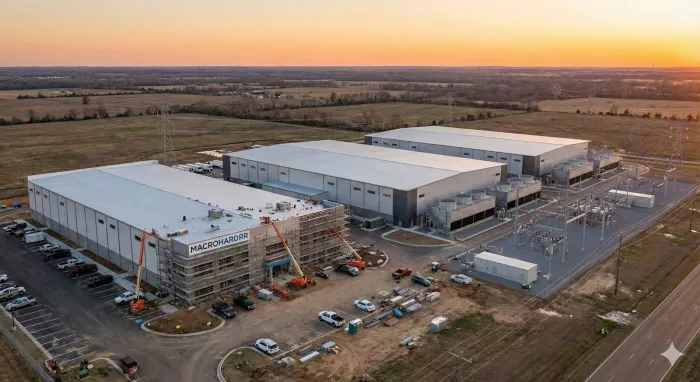
Colossus is not a single building but an emerging three‑site AI campus around Memphis and nearby Southaven, stitched together as one logical supercomputer.
● Colossus 1: Built in a repurposed Electrolux factory in South Memphis, originally brought online in roughly 122 days, an unusually fast buildout for a frontier‑scale AI cluster.
● Colossus 2: A second, larger facility under construction with a target power envelope near 1 GW and a GPU count reportedly exceeding 555,000 units on its own.
● Third building (“MACROHARDRR”): A newly acquired warehouse adjoining Colossus 2 in Southaven, Mississippi, which xAI plans to convert into an additional data center to push total compute capacity close to 2 GW.
Internally, the campus is engineered as a coherent training factory rather than three isolated data centers, with ultra‑dense networking fabric and exabyte‑scale storage to keep GPU clusters saturated.
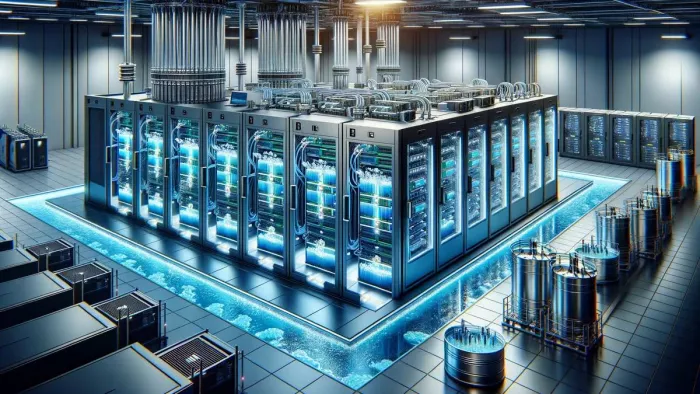
The Colossus roadmap is explicitly GPU‑first: xAI is designing the campus around a long‑term target of around 1 million accelerators dedicated to training and serving its Grok models.
● Early configurations centered on roughly 100,000 Nvidia H100‑class GPUs, already enough to train Grok‑scale models.
● Colossus 2 alone is slated to host more than 555,000 GPUs in a single megasite build, with procurement reportedly in the range of 18 billion dollars just for the GPUs.
● Across the campus, xAI is layering different Nvidia generations (H100, H200 and Blackwell‑class GB200/GB300), with some public reports suggesting aggregate memory bandwidth on the order of hundreds of petabytes per second and storage north of 1 exabyte.
The strategic angle is clear: whoever controls the densest, most tightly coupled GPU clusters can train the largest multi‑modal models fastest, iterate more frequently, and potentially lower per‑token training cost over time.
To feed a 2‑GW AI machine, xAI is not relying solely on the grid; it is effectively becoming its own energy developer.
● Natural gas turbines: xAI has secured permits in Shelby County to operate natural‑gas‑burning turbines that directly power the supercomputer, with up to 15 turbines formally authorized and satellite imagery suggesting even larger deployments over time.
● Co‑location with gas infrastructure: The third data center sits next to a gas‑fired power facility that xAI is building, reducing transmission losses and giving the company more control over reliability than a traditional utility‑only model.
● Hybrid power and storage: Financial disclosures and local reporting point to the use of Tesla Megapack batteries as backup and peak‑shaving infrastructure, aligning the project with Musk’s broader energy‑storage ecosystem.
This power strategy trades lower carbon performance than a fully renewable buildout for speed and control: gas turbines can be deployed and ramped quickly, matching the countdown of AI model roadmaps rather than the slower timelines of grid expansion.

Turning Colossus into a 2‑GW AI factory has already triggered a wave of regulatory scrutiny and local pushback, and that tension is likely to intensify as the campus scales.
● Air quality and health: Residents and environmental groups allege that the turbines are degrading air quality, with documented emissions of nitrogen oxides and formaldehyde that are associated with increased respiratory risks.
● Legal actions: The NAACP, represented by the Southern Environmental Law Center, has taken legal action arguing that xAI’s turbine operations violate the Clean Air Act and exceed the bounds of the current permit, pointing to evidence of more turbines on‑site than officially authorized.
● Regulatory guardrails: The current permits impose emissions testing, strict operating conditions, and potential penalties of up to 10,000 dollars per day per violation, setting a precedent for how aggressively local regulators will police AI‑driven industrial power projects.
For Memphis, the project is simultaneously the largest multi‑billion‑dollar tech investment in city history and a flashpoint in a broader debate over environmental justice in historically disadvantaged neighborhoods.

Colossus is less a one‑off data center and more a physical expression of Musk’s thesis that the next phase of AI will be constrained by energy and hardware, not algorithms.
● Competitive positioning: By pushing toward a 2‑GW, million‑GPU footprint, xAI is signaling that it intends to compete head‑on with the largest clusters deployed by hyperscalers backing OpenAI, Anthropic, and Google’s Gemini, rather than occupying a niche.
● Capital intensity: xAI has already raised around 10 billion dollars through equity and loans, and has reportedly been in talks with investors including Saudi Arabia’s Public Investment Fund to add another 20 billion, potentially valuing the company above 170 billion dollars before Colossus is even fully built out.
● From social network to AI grid: Because Grok is tightly integrated into X, the social platform effectively becomes a front‑end for this massive compute grid, giving xAI an immediate distribution channel while also creating expectations that the hardware will translate into visibly faster, smarter consumer‑facing products.
Conclusion
Colossus shows how quickly AI research has jumped from cloud workloads to physical industrial megaprojects that look more like refineries or power plants than server rooms. By driving toward a 2‑gigawatt, million‑GPU campus with its own gas turbines and battery systems, xAI is effectively testing whether vertical control of compute, energy and infrastructure can deliver a durable advantage over better‑capitalized hyperscalers. The same features that make Colossus an AI behemoth—unprecedented power draw, dense GPU racks and rapid buildout—also make it a live test of how far regulators, local communities and the grid itself are willing to stretch to accommodate the next wave of frontier AI.

AI-powered image editing has moved far beyond simple filters. Today’s...

AI chat platforms built around fictional characters and roleplay conve...

AI chat platforms have evolved far beyond simple question-and-answer b...

Platform OverviewCutout.pro is an AI-powered image editing platform de...

AI chat platforms designed for roleplay and interactive conversations...
Goth AI is a character-based AI chat platform designed for dark, gothi...

Discussion