DeepSeek AI usually stops meeting expectations at a very specific point. Not when you test it once, but when you start depending on it. The outputs begin to feel inconsistent across similar prompts. A response that works well one moment may fail under slightly different phrasing. In coding tasks, reasoning can break mid-way. In longer workflows, context handling starts to slip.
The issue is not capability. It is reliability under pressure.
That is where most users start looking beyond DeepSeek. Not for a tool that is dramatically more powerful, but for one that behaves predictably across repeated use.
Official url- (https://claude.ai/)
Claude is often the first tool users move to after experiencing inconsistency with DeepSeek. The difference becomes obvious in longer interactions. Claude maintains structure better, follows instructions more carefully, and produces outputs that feel stable across multiple prompts.
In reasoning-heavy tasks, this matters a lot. Whether it is analyzing a document, writing structured content, or explaining code, Claude tends to stay on track. It does not drift as easily, and it handles nuance with more clarity.
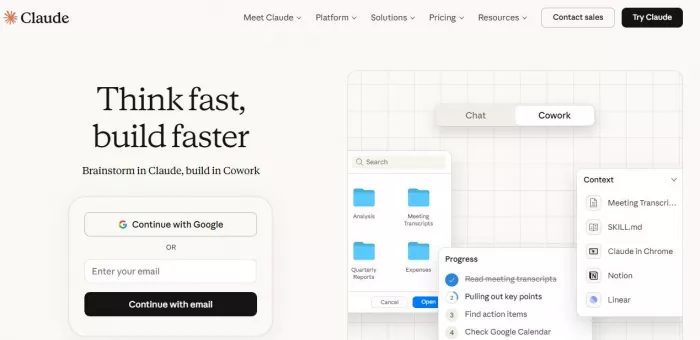
For writing workflows, Claude also feels more natural. It produces cleaner, more readable outputs without needing heavy prompt tuning. This reduces the effort required to get usable results.
Pricing is aligned with the rest of the market. There is a free tier, and paid plans generally start around $17 per month.
Where Claude falls short is outside reasoning. It does not have the same ecosystem depth as ChatGPT. There are fewer integrations, and the overall platform feels more focused on core model performance rather than workflow expansion.
But for users frustrated with inconsistency, Claude usually solves that problem immediately.
Official url- (https://chatgpt.com/)
ChatGPT approaches the problem differently. Instead of focusing purely on reasoning, it offers a balanced system that works across multiple tasks.
Compared to DeepSeek, ChatGPT feels more reliable in day-to-day usage. It handles coding, writing, research, and general tasks without requiring constant adjustments. The outputs are not always the most precise, but they are consistently usable.
The biggest advantage is the ecosystem. Features like file uploads, browsing, integrations, and tool extensions make it easier to use in real workflows. It is not just a model. It is an environment.
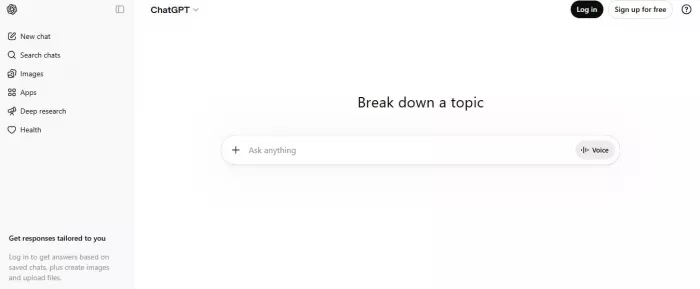
Pricing typically follows the same structure as Claude, with a free tier and paid plans around $20 per month.
The trade-off is subtle. While ChatGPT is strong across many areas, it does not always match Claude in deep reasoning clarity. In complex analytical tasks, Claude can feel more precise.
But for most users, the balance matters more than specialization. ChatGPT reduces friction across multiple use cases, which makes it easier to rely on daily.
Official url- (https://gemini.google.com/)
Gemini becomes relevant in a different way. Its strength is not just the model itself, but how it integrates with Google’s ecosystem.
If your work happens inside Docs, Gmail, Sheets, or Drive, Gemini starts to feel like a natural extension rather than a separate tool. You can move between tasks without switching environments, which reduces friction.
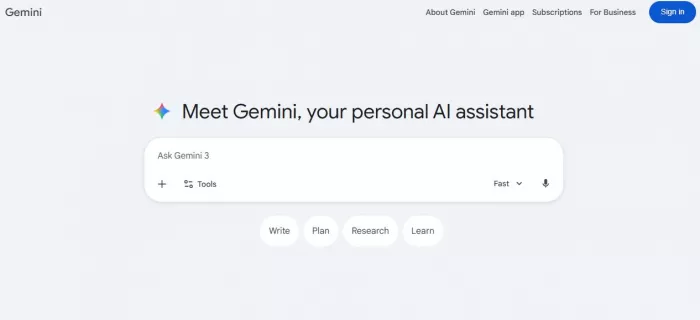
It also handles multimodal inputs well. Text, images, and structured data can be processed together, which makes it useful for certain workflows.
Pricing is similar to other tools, with free access and paid tiers around $20 per month, depending on usage.
The limitation is consistency. Compared to Claude and ChatGPT, Gemini can feel less stable in complex reasoning tasks. It performs well in integrated workflows, but not always in deep analytical scenarios.
For users outside the Google ecosystem, its advantage becomes less meaningful.
Official url- (https://chat.mistral.ai/)
Mistral operates differently from the other tools in this comparison. Instead of focusing only on polished interfaces, it emphasizes flexibility and control.
Its open-weight models allow developers and teams to run AI systems locally or customize them for specific use cases. This reduces dependency on a single platform and gives more control over how the model behaves.

This makes Mistral particularly useful in technical environments. If you need to integrate AI into your own systems or build custom workflows, it offers more freedom than tools like ChatGPT or Claude.
Pricing varies depending on usage and deployment. There is no simple subscription model like the others.
The downside is accessibility. Mistral is not designed for casual users. It requires technical understanding, and the experience is less streamlined.
For most users, it is not a direct replacement for DeepSeek. But for developers, it can be a stronger long-term option.
| Tool | Best Strength | Weakness | Best Use Case |
| Claude | Strong reasoning and consistency | Smaller ecosystem | Analysis, writing, structured tasks |
| ChatGPT | Balanced performance and ecosystem | Slightly less precise reasoning | Daily workflows, coding, general use |
| Gemini | Deep Google integration | Less consistent reasoning | Productivity inside Google tools |
| Mistral | Flexibility and control | Not user-friendly | Development, custom AI systems |
At this stage, the choice becomes clearer because each tool solves a different version of DeepSeek’s limitations.
● Claude focuses on fixing the inconsistency. It gives you stable, predictable outputs, especially in reasoning-heavy tasks.
● ChatGPT focuses on usability. It gives you a system that works across multiple workflows without needing adjustments.
● Gemini focuses on integration. It reduces friction if your work already happens inside Google’s ecosystem.
● Mistral focuses on control. It gives you flexibility if you want to build your own systems.
This is not about which tool is better overall. It is about which problem you are trying to solve.
● Inconsistency as the main problem points directly toward Claude, which delivers more stable and reliable outputs across repeated use
● Workflow friction or usability issues make ChatGPT the safer and more practical choice for everyday tasks
● A workflow built around Google tools makes Gemini more relevant, as its integration becomes a clear advantage
● Greater control and flexibility requirements make Mistral a stronger long-term option, especially for technical setups
● In most cases, the decision naturally narrows down to Claude and ChatGPT as the most practical options
● For real-world usage, ChatGPT often becomes the default due to its balance, while Claude stands out in situations where precision and reasoning matter more
What "Safe" and "Legit" Actually Mean HereMost reviews answer neither...

Intel has joined Elon Musk’s ambitious “Terafab” semiconductor initiat...

Where automation actually saves time in real workflowsInstead of think...
April 7, 2026Samsung Electronics said Tuesday it expects first-quarter...
For the past few months, a name kept appearing in my inbox and social...
Anthropic is tightening how its AI coding platform is billed, confirmi...
Discussion