People don’t leave Synthesia because it’s bad. They leave because it stops making sense.
You hit the limit faster than expected.
● Minutes run out quickly
● Avatars start feeling repetitive
● Cost scales faster than output
What looks like a clean “$30–$90/month” tool turns into a usage problem. You’re not paying for software. You’re paying per minute without realizing it upfront.
And then the bigger issue shows up.
The videos start looking… the same.
Same tone, same pacing, same slightly stiff delivery. Fine for internal training, but not great if you’re trying to hold attention.
So the question becomes simple:
What do you actually need instead?
Because it solves the most obvious problem first: realism.
Compared to Synthesia, HeyGen avatars feel less robotic. Lip sync is tighter, expressions are slightly more fluid, and multilingual output is stronger, especially for marketing content. (heygen.com)
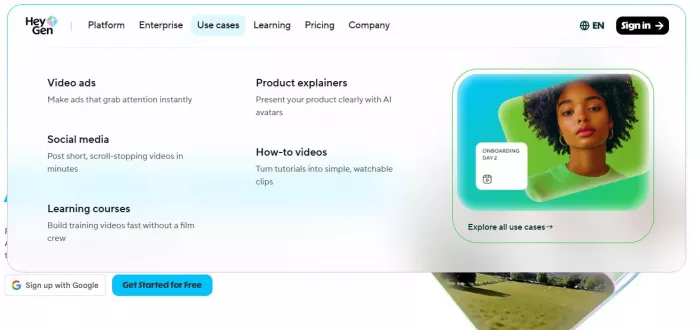
This is usually the moment where people think, “Okay, this is what I expected from AI video.”
Pricing starts around $24–$29/month, but that number is misleading.
Because like Synthesia, it still runs on a credit-based or usage-based system underneath.
That’s where friction comes back:
● Credits drain faster than expected
● Pricing structure isn’t always clear upfront
● Scaling content becomes expensive again
Ratings reflect this split experience:
● G2: ~4.8/5
● Trustpilot: ~4.0/5
So, HeyGen is better output-wise. But it doesn’t fully solve the cost problem.
This is where expectations shift.
D-ID starts around ~$5.9/month, which makes it one of the cheapest entry points in this space.
And for basic use, it works. (d-id.com)
● Simple talking avatars
● Quick generation
● Lower upfront cost
But the difference is obvious the moment you compare outputs.
● Facial movement feels less refined
● Lip sync isn’t always perfect
● Overall polish is lower
You’re trading realism for affordability.
And for some use cases, that’s fine.
For others, especially client-facing content, it starts becoming noticeable.

If you’re creating ads, YouTube content, or short-form videos, avatars might actually be slowing you down.
That’s where tools like InVideo or Pictory start making more sense.
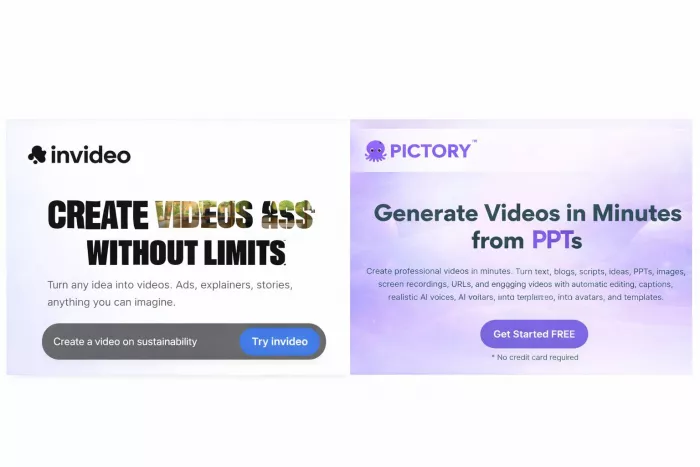
Because they remove the entire avatar layer.
Instead of:
Script → avatar → render
You get:
Script → visuals → voiceover → done
Pricing sits roughly between $25–$60/month depending on plan.
And the benefits are immediate:
● Faster production
● More visual variety
● No “stiff avatar” problem
Ratings are consistently strong:
● G2: ~4.5/5
● Capterra: ~4.6/5
But the trade-off is clear.
You lose the “human presenter” format entirely.
So these tools don’t replace Synthesia. They replace the need for it.
For training videos, courses, or internal content, realism matters less than structure.
That’s where Elai.io becomes a more practical replacement.
Instead of focusing on avatar quality, it focuses on workflow.
● PPT to video conversion
● Structured scenes
● More control over layout
Pricing starts around ~$29/month and goes up to ~$125 for advanced plans.
Ratings:
● G2: ~4.7/5
The advantage is clarity.
You’re not fighting the tool to structure your content.
The downside is speed.
Rendering can feel slower, and the output still carries some of that “AI-generated stiffness.”
This is where things stop being just video generation.
Colossyan focuses on interactive training. (colossyan.com)
● Quizzes inside videos
● Branching scenarios
● More engagement-driven formats
Pricing ranges from ~$25–$70/month.
Ratings:
● G2: ~4.3–4.5/5
But it’s not flexible.
You don’t use Colossyan for ads or social content. It’s built for structured learning.
So it solves a very specific problem, not a general one.
At this point, the decision stops being about “which is best” and becomes “what trade-off you can live with.”
| Tool | Starting Price | Best For | Limitation |
| HeyGen | ~$24/month | Realistic avatars | Credit-based pricing confusion |
| D-ID | ~$5.9/month | Budget users | Lower output quality |
| Elai.io | ~$29/month | Training content | Slower rendering |
| InVideo | ~$25/month | Marketing videos | No avatar-based delivery |
| Colossyan | ~$25/month | Interactive training | Limited flexibility |
Almost none of these tools are truly “unlimited.”
You’re paying in one of three ways:
● Per minute
● Per credit
● Through hidden output limits
And this is where frustration builds.
A 60–90 second video can consume a significant chunk of your monthly allowance.
Which means:
● Scaling content becomes expensive
● Experimentation becomes risky
● Iteration slows down
This is the same problem people had with Synthesia. It just shows up differently in other tools.
● If you want the closest upgrade to Synthesia, you move to HeyGen and accept the pricing complexity
● When budget is the problem, you go with D-ID and accept lower polish
● While you’re creating marketing content, you skip avatars entirely and use InVideo or Pictory
● For building training or course material, you move to Elai or Colossyan depending on interactivity
● And if you’re scaling content production seriously, you start avoiding credit-heavy tools altogether
Because the real issue isn’t just Synthesia.
It’s how AI video pricing works across the entire category.

Artificial intelligence has rapidly moved beyond productivity tools an...

AI website builders have shifted from simple template tools to systems...

April 4, 2026Elon Musk has asked banks involved in SpaceX’s anticipate...
When dashboards exist but decisions still stallA mid-sized ecommerce c...

Alternatives Based on What You Want to FixIf You Want Better Pipeline...

Canberra, April 1, 2026- The Australian government has entered into a...

Discussion