There was a time when manual Google Ads management was a competitive advantage. Skilled marketers could outbid competitors, tweak keywords, and optimize campaigns with hands-on control.
That era is fading fast.
Modern Google Ads environments are now shaped by:
● Auction-time bidding decisions
● Rapid CPC volatility
● Cross-channel attribution complexity
● Creative fatigue happening faster than ever
● Privacy-driven signal loss
The sheer number of micro-decisions required to stay competitive has exploded. Human optimization cycles, even for experienced media buyers, are simply too slow and too reactive.
In many accounts today, the real performance gap is not budget. It is optimization velocity.
This is exactly where AI-powered tools have started to outperform purely manual workflows.
AI does not just automate tasks. At its best, it compresses the feedback loop between data and action.
Modern AI ad tools enhance four critical layers of Google Ads management.
Real-time bid adjustments based on intent signals, device, location, and historical conversion patterns.
Pattern detection across large datasets to identify high-probability converters.
Rapid production and iteration of ad copy variations to combat creative fatigue.
Dynamic shifting of spend toward high-performing campaigns and segments.
Marketers who combine platform-native automation with external AI tools often see faster learning cycles and more stable ROAS curves.
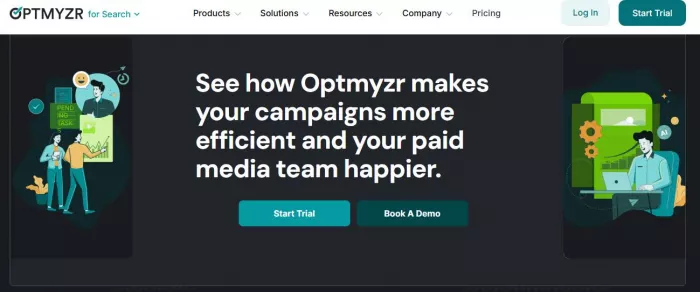
Optmyzr is one of the most established AI-assisted PPC optimization platforms. It focuses on rule-based automation enhanced by machine learning insights, making it especially valuable for accounts with scale and complexity. (Optmyzr)
1. Automated bid and budget management
2. PPC rule engine with AI recommendations
3. Account anomaly detection
4. One-click optimization workflows
5. Advanced reporting dashboards
1. Agencies managing multiple accounts
2. Mid-to-large ecommerce advertisers
3. Performance marketers who want structured control
1. Extremely strong for workflow automation
2. Deep Google Ads integration
3. Highly customizable optimization rules
4. Excellent for agencies at scale
1. Learning curve for beginners
2. Interface can feel dense
3. Less focused on creative generation
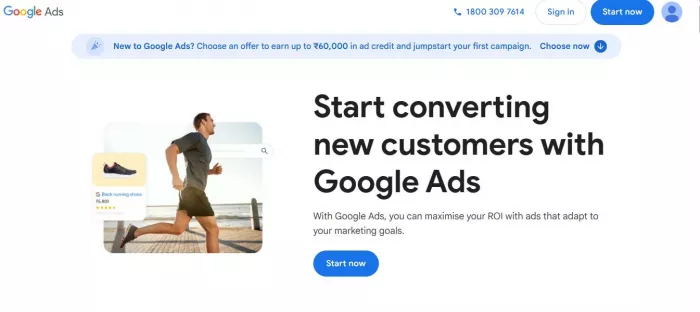
Performance Max is Google’s own AI-driven campaign type that automates bidding, placements, audiences, and creative combinations across Google’s inventory.
It is not optional anymore for many advertisers. It is becoming the default AI layer inside Google Ads. (Google Ads)
1. Fully automated cross-channel placement
2. Smart bidding at auction time
3. Asset-based creative optimization
4. Audience signal expansion
5. Real-time budget fluidity
1. Ecommerce brands
2. Lead generation at scale
3. Advertisers with strong conversion tracking
1. Native access to Google’s full signal stack
2. Strong performance when data volume is high
3. Minimal manual management required
4. Excellent for scaling campaigns
1. Reduced transparency
2. Limited manual control
3. Requires clean conversion data
4. Can overspend without guardrails
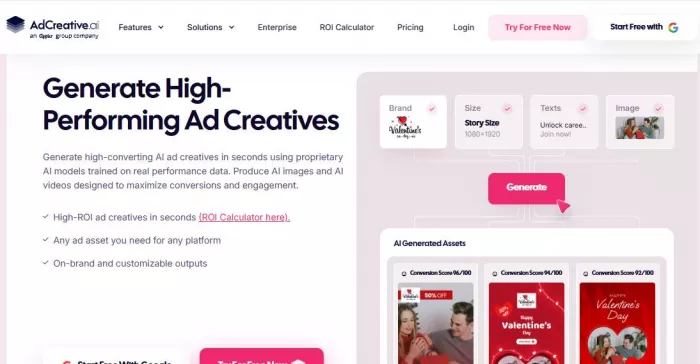
AdCreative.ai focuses on AI-generated ad creatives optimized for conversion performance. While not a bidding tool, it directly impacts one of the biggest hidden ROI levers: creative testing velocity. (AdCreative.ai)
1. AI-generated ad copy and visuals
2. Conversion-focused creative scoring
3. Batch creative production
4. Competitor creative insights
5. Multichannel support
1. Creative-heavy advertisers
2. Ecommerce brands fighting ad fatigue
3. Teams needing rapid creative iteration
1. Speeds up creative testing dramatically
2. Data-backed creative scoring
3. Beginner-friendly interface
4. Strong for paid social plus search display
● Not a full PPC management platform
● Requires human creative judgment
● Best results when paired with strong offers
Revealbot is an automation and rules engine for paid media that allows AI-informed decision-making across budgets, bids, and performance thresholds. (Revealbot)
It excels in cross-platform automation.
1. Automated rules based on ROAS and CPA
2. Budget auto-scaling
3. Performance alerts
4. Cross-channel automation
5. Scheduled optimization workflows
1. Agencies managing multiple channels
2. Performance marketers running frequent tests
3. Accounts needing guardrail automation
1. Strong automation flexibility
2. Good cross-platform visibility
3. Reduces manual monitoring load
4. Useful for scaling campaigns safely
1. Requires thoughtful rule setup
2. Not fully autonomous AI
3. Interface takes time to master
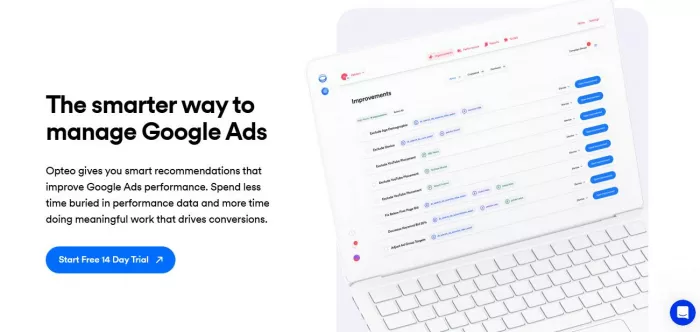
Opteo is designed to simplify Google Ads optimization using AI-driven recommendations and account health monitoring. It is especially popular with small teams and growing advertisers. (Opteo)
1. AI-powered account insights
2. Smart bid recommendations
3. Performance alerts
4. Account health scoring
5. Streamlined reporting
1. Beginners and small businesses
2. In-house marketing teams
3. Accounts under heavy time constraints
1. Very user-friendly
2. Quick wins for smaller accounts
3. Helpful alert system
4. Good onboarding experience
1. Less powerful at enterprise scale
2. Limited deep automation
3. Not built for highly complex accounts
● Opteo
● Performance Max (with guardrails)
These tools reduce complexity and provide guided optimization.
● Optmyzr
● Revealbot
They offer the workflow depth and automation control agencies need at scale.
● Performance Max
● Optmyzr
● AdCreative.ai (as a creative engine)
Scaling advertisers benefit most from combining bidding AI with creative AI.
The future of Google Ads is not fully manual and not fully automated. It is strategically AI-assisted.
Choose based on your primary bottleneck:
1. Time constraints → Opteo
2. Account complexity → Optmyzr
3. Scaling aggressively → Performance Max + Revealbot
4. Creative fatigue → AdCreative.ai
5. Agency workflow depth → Optmyzr + Revealbot
The advertisers winning today are not the ones replacing humans with AI.
They are the ones increasing optimization velocity while maintaining strategic oversight.
Because in modern Google Ads, the real advantage is no longer who works harder.
It is who learns faster and acts sooner.

Artificial intelligence has rapidly moved beyond productivity tools an...

AI website builders have shifted from simple template tools to systems...
April 4, 2026Elon Musk has asked banks involved in SpaceX’s anticipate...
When dashboards exist but decisions still stallA mid-sized ecommerce c...

Alternatives Based on What You Want to FixIf You Want Better Pipeline...
Canberra, April 1, 2026- The Australian government has entered into a...

Discussion