AI Insights DualMedia refers to a modern analytics approach that combines artificial intelligence with the analysis of both traditional and digital media sources. Instead of studying television broadcasts, print news, or social media separately, this model examines them together to uncover deeper patterns about public opinion, brand perception, and communication trends.
The concept emerged because media consumption has become fragmented. People still watch television and read newspapers, but they also spend significant time on platforms such as social networks, online news websites, podcasts, and blogs. Organizations that analyze only one type of media often miss important signals about how audiences actually respond to information.
AI Insights DualMedia addresses this gap by collecting information from multiple media environments and applying artificial intelligence to interpret the data. The goal is not simply to monitor mentions or track keywords. Instead, the system aims to generate actionable insights that help companies, researchers, and governments understand how narratives spread across different communication channels.
This approach is particularly useful for industries that depend on public perception. Marketing teams use it to measure campaign impact, media organizations use it to understand audience engagement, and public institutions use it to monitor public sentiment about policies or events.
AI Insights DualMedia systems operate through a combination of large scale data collection and advanced artificial intelligence technologies. These systems continuously gather media content from many sources and then analyze the information using machine learning models.
Several technologies play a central role in this process.
● Machine learning models that detect patterns and correlations in large datasets
● Natural language processing that interprets written and spoken language from media content
● Data analytics platforms that process and visualize cross channel insights
● Automated classification systems that categorize media topics and trends
In practical terms, the process usually follows several stages. First, the system collects content from both traditional and digital media sources. This may include television transcripts, newspaper articles, podcasts, social media posts, blogs, and online publications.
Next, natural language processing models analyze the text to identify topics, keywords, and sentiment. Machine learning algorithms then detect patterns such as changes in audience attitudes or emerging conversations around specific issues.
Finally, the system produces dashboards or reports that show insights in a structured way. Marketing teams, analysts, or communication managers can then use these insights to make strategic decisions.
The term dual media refers to the combined analysis of traditional media channels and digital media platforms. Historically, media monitoring tools focused primarily on one category at a time. For example, companies might track television coverage separately from social media discussions.
AI Insights DualMedia takes a different approach by analyzing both environments together.
Traditional media sources typically include
● television broadcasts and news programs
● radio shows and podcasts
● newspapers and magazines
● print journalism and editorial coverage
Digital media channels usually include
● social media platforms
● blogs and online publications
● video sharing platforms
● online discussion forums
The advantage of combining these sources is that it reveals how narratives move across platforms. For example, a story might begin on television, gain momentum through online news sites, and then spread widely on social media.
By analyzing these channels simultaneously, AI systems can track how information evolves and how audiences react at each stage.
AI driven media intelligence platforms provide several powerful analytical capabilities that help organizations interpret large amounts of information.
One of the most important capabilities is real time media monitoring. These systems continuously scan thousands of media sources and alert organizations when important keywords, topics, or brand mentions appear.
Another major capability is sentiment analysis. Natural language processing models evaluate whether a piece of media content expresses positive, negative, or neutral opinions about a specific topic.
Other capabilities include
● keyword tracking across multiple media channels
● trend detection based on conversation patterns
● audience behavior analysis across platforms
● predictive analytics that estimate future trends
For example, a company launching a product may track both news coverage and social media reactions. If the system detects a sudden rise in negative sentiment, the company can respond quickly before the issue spreads further.
Cross platform integration is also an important feature. Many AI Insights DualMedia systems connect with analytics tools and marketing platforms, allowing organizations to combine media data with customer data and campaign performance metrics.
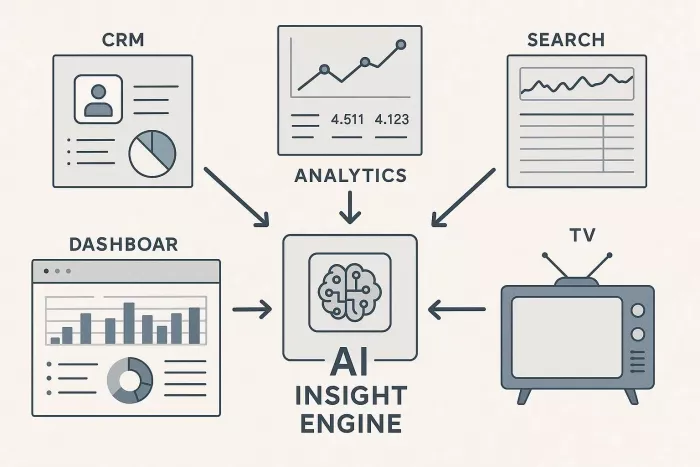
Companies and institutions rely on AI Insights DualMedia to understand how their messages are received across different communication channels. Because the system analyzes both traditional and digital media environments, it offers a broader perspective than single platform monitoring tools.
Common applications include
● brand monitoring across television, news websites, and social media
● campaign performance analysis across multiple channels
● tracking public sentiment toward products or policies
● identifying early warning signals for reputation risks
Marketing teams often use these insights to refine communication strategies. If a campaign performs well on social media but receives negative news coverage, the system can highlight the discrepancy and help marketers adjust their messaging.
Crisis monitoring is another important use case. Organizations can detect spikes in negative sentiment or media coverage related to controversies, allowing them to respond quickly and manage reputation risks.
Several studies show that AI powered cross channel analytics can significantly improve marketing performance.
Research by McKinsey has found that organizations using advanced analytics for marketing decision making can improve marketing ROI by 15 to 20 percent compared with companies relying on traditional methods.
Similarly, a 2023 report by Deloitte highlighted that companies using AI driven sentiment analysis tools improved customer engagement metrics by more than 25 percent in digital campaigns.
These improvements occur because AI systems detect patterns that humans may overlook. By analyzing millions of media interactions across channels, AI Insights DualMedia platforms help organizations identify which messages resonate most strongly with audiences.
| Feature | Description |
| Media Monitoring | Tracks mentions across television, print, and digital channels |
| Sentiment Analysis | Uses AI to classify public opinion toward topics or brands |
| Trend Detection | Identifies emerging conversations and media patterns |
| Predictive Analytics | Estimates future trends based on historical data |
| Cross Platform Integration | Connects media insights with marketing and analytics tools |
AI Insights DualMedia provides several advantages for organizations that need to understand complex media environments.
Benefits
● Combines multiple media channels into one analytical view
● Processes large amounts of data faster than manual analysis
● Identifies trends and sentiment changes quickly
● Helps organizations respond faster to public opinion shifts
However, there are also limitations to consider.
Limitations
● AI sentiment models can misinterpret sarcasm or context
● Data privacy regulations may limit data collection in some regions
● High quality systems require significant computing infrastructure
● Human interpretation is still needed to understand deeper cultural nuances
| Aspect | Benefits | Limitations |
| Data Analysis | Processes massive datasets quickly | Requires high computing resources |
| Insights | Detects trends and sentiment patterns | AI models may misinterpret context |
| Strategy | Supports data driven decisions | Requires human review and interpretation |
AI Insights DualMedia is valuable across several industries where public communication plays a central role.
Marketing and advertising agencies use these systems to analyze brand perception and campaign effectiveness. Media companies use them to study audience engagement across platforms. Public sector organizations rely on them to monitor public reactions to policies.
Industries that benefit the most include
● marketing and advertising
● news and media organizations
● healthcare communication teams
● education institutions and public outreach programs
Healthcare organizations often analyze public sentiment around medical topics or health campaigns. Educational institutions may study how information spreads about policy changes or research initiatives.
AI Insights DualMedia systems are already being applied in several real world scenarios.
| Industry | Example Use Case |
| Marketing | Tracking brand perception during a global product launch |
| Healthcare | Monitoring public discussion around vaccination campaigns |
| Education | Analyzing public response to new education policies |
| Media | Studying how news stories spread across TV and social platforms |
In marketing, for example, companies launching new products often monitor both news coverage and social media discussions. If traditional media coverage triggers a surge of online conversations, AI systems can identify the pattern and measure its impact on audience sentiment.
What does AI Insights DualMedia actually do?
It collects information from traditional media sources and digital platforms, then uses artificial intelligence to analyze patterns, sentiment, and trends. The goal is to generate insights that help organizations understand how information spreads and how audiences respond.
How is it different from normal media monitoring tools?
Traditional media monitoring tools typically focus on tracking mentions or keywords. AI Insights DualMedia systems go further by analyzing sentiment, identifying patterns across channels, and predicting future trends using machine learning.
Is it used only for marketing?
No. While marketing teams use it heavily, the technology is also used in healthcare communication, media research, public policy analysis, and education.
Why is dual media analysis important today?
Modern audiences consume information across multiple platforms. A story might begin in television news and spread quickly through social media discussions. Dual media analysis helps organizations track how information moves across these channels and how public perception evolves.
AI chat platforms designed for roleplay and interactive conversations...
Goth AI is a character-based AI chat platform designed for dark, gothi...

Artificial Intelligence (AI) is increasingly taking a front seat in sh...
AI copywriting tools have become core infrastructure for modern market...

For decades, the enterprise mainframe has been the quiet backbone of g...
If you are choosing between Rytr and Writesonic, you probably care abo...

Discussion