The line between human and machine capabilities continues to blur as artificial intelligence evolves. Automation has become the heartbeat of modern enterprises, streamlining processes once dominated by manual labor. But as technology advances, the world is seeing a pivotal shift from AI Assistants—which augment human productivity—to AI Agents, designed to think and act autonomously.
This shift raises an important question: Which of these two AI paradigms will define the future of automation? To answer this, we must first understand their foundation, evaluate their distinct roles, and examine how emerging agentic systems are poised to revolutionize industries.
AI Assistants refer to intelligent systems that help users perform specific tasks through natural language interaction or predefined commands. Popular examples include ChatGPT, Google Assistant, Siri, and Alexa. These tools rely on user prompts to provide information, perform actions, or automate repetitive workflows. They are reactive—responding to instructions rather than initiating tasks independently.
In contrast, AI Agents represent a more advanced and autonomous model of artificial intelligence. Built on large language models and reasoning frameworks, AI agents are goal-driven, capable of planning, deciding, and acting without constant user input. They can break complex objectives into smaller subtasks, execute them sequentially, interact with multiple APIs or data sources, and refine their performance through feedback loops.
In essence, while AI Assistants extend human ability, AI Agents replicate cognitive behavior, positioning themselves as decision-makers rather than just digital helpers.
| Feature | AI Assistants | AI Agents |
| Nature of Function | Reactive — responds to user prompts | Proactive — acts toward predefined goals |
| Decision-Making Ability | Minimal, dependent on human input | High, with autonomous reasoning |
| Task Complexity | Handles single or simple tasks | Manages multi-step, goal-oriented workflows |
| Integration Capabilities | Limited to set tools or platforms | Can integrate with APIs, data systems, and other software |
| Learning Ability | Relies on trained data, less adaptive | Continuously learns from environment and outcomes |
| Examples | ChatGPT, Siri, Alexa, Google Assistant | AutoGPT, CrewAI, Devin, OpenAI’s advanced agent systems |
AI Assistants simplify how we work, while AI Agents are transforming how work gets done. This fundamental difference positions agents as the next frontier in business automation.
Both AI Assistants and AI Agents serve unique but complementary purposes across industries.
● Customer Support: Power chatbots and helpdesks with real-time query resolution.
● Content Creation: Generate blogs, email drafts, and social media content.
● Personal Productivity: Schedule meetings, manage reminders, and organize workflows.
● E-commerce: Guide customers, personalize shopping experiences, and support cross-selling.
● Marketing Automation: Design campaigns, test performance metrics, and adjust strategies autonomously.
● Software Engineering: Tools like Devin act as AI developers, writing, testing, and debugging code.
● Finance: Analyze and execute investment strategies with real-time algorithmic decision-making.
● Operations Management: Oversee supply chains, logistics, and predictive maintenance with minimal oversight.
● Recruitment: Automate candidate screening, interview scheduling, and onboarding workflows.
The key difference lies in scope and autonomy. Assistants follow your lead; agents lead the process themselves.
● Ease of use through conversational interfaces.
● Increase in productivity for manual or creative tasks.
● High reliability for structured and repeatable activities.
● Immediate accessibility without technical configuration.
● Dependence on user prompts.
● Inability to manage independent goals.
● Limited multi-tasking or reasoning capacity.
● True autonomy in planning and decision-making.
● Goal-oriented operations that reduce need for human oversight.
● Continuous learning loops that improve performance.
● Scalability for complex systems across various domains.
● High computational and infrastructure costs.
● Opaque reasoning, making accountability difficult.
● Risk of unpredictable actions in open environments.
● Ethical and regulatory challenges regarding responsibility and transparency.
The automation landscape is moving from simple, instruction-based systems to self-directed, goal-achieving entities. As organizations adopt agentic systems, human labor will increasingly shift from performing tasks to defining objectives.
According to Gartner’s 2026 AI Forecast, more than 40% of enterprise automation systems will be powered by AI agents by 2028—up from less than 5% in 2024. Similarly, McKinsey’s AI Adoption Index highlights that agentic systems can outperform assistive AI by over 60% in productivity and decision efficiency.
However, AI Assistants will retain dominance in personal and front-end workflows, thanks to their conversational ease and lower risk profile. The future will likely feature a hybrid ecosystem, where assistants facilitate communication while agents drive the core automation engine.
As autonomy increases, ethical responsibility becomes complex.
Key issues include:
● Accountability: Who is liable if an AI agent makes a harmful or incorrect decision?
● Bias and Fairness: Agents that act across multiple systems risk inheriting data bias or amplifying it.
● Transparency: As agents evolve reasoning patterns beyond direct human comprehension, policymakers face challenges in defining AI “explainability.”
● Data Privacy: Agentic systems that access multiple data sources may unintentionally breach privacy boundaries.
● Regulatory Gaps: Current laws are built for assistive AI, not self-directing agents, leaving room for uncertainty.
Ensuring ethical design, human oversight, and robust auditing mechanisms is essential before these systems can fully integrate into mainstream operations.
The evolution from AI Assistants to AI Agents marks a monumental leap in the AI timeline from guidance-driven systems to goal-oriented intelligence.
AI Assistants will continue to shape human-AI collaboration by streamlining communication, while AI Agents will redefine automation with autonomy, adaptability, and continuous optimization. The future will belong to organizations that harness this synergy combining human creativity, assistant-level interaction, and agent-level execution.
In short, AI Agents will lead the automation revolution, while AI Assistants will empower humans to guide it. Together, they represent the perfect partnership between intelligence and initiative the foundation of the next era of smart automation.
AI-powered image editing has moved far beyond simple filters. Today’s...
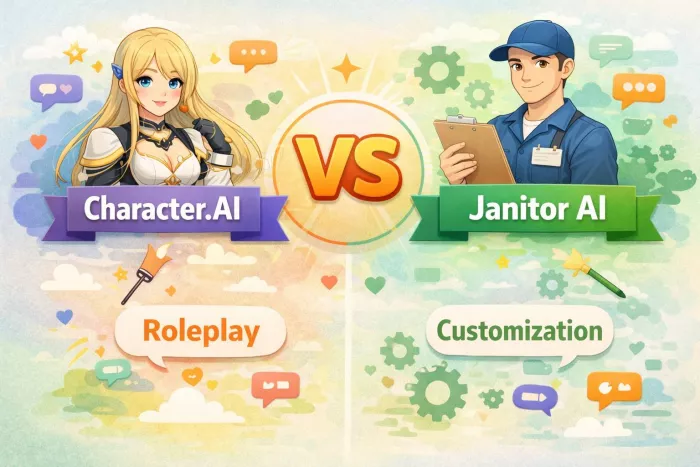
AI chat platforms built around fictional characters and roleplay conve...
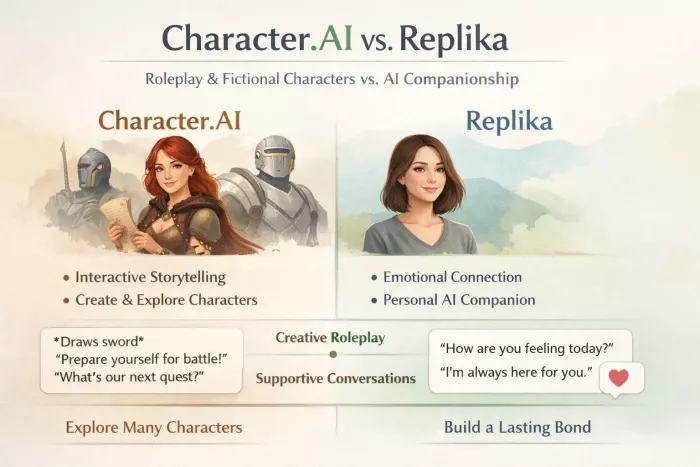
AI chat platforms have evolved far beyond simple question-and-answer b...

Platform OverviewCutout.pro is an AI-powered image editing platform de...
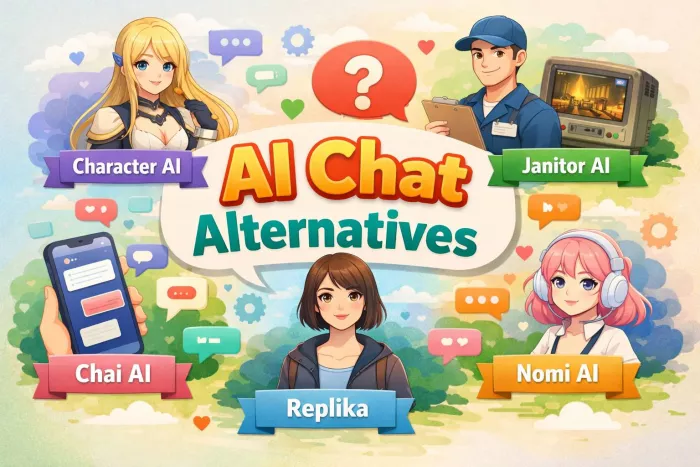
AI chat platforms designed for roleplay and interactive conversations...
Goth AI is a character-based AI chat platform designed for dark, gothi...

Discussion