There is a quiet shift happening inside AI chat platforms, and it has little to do with productivity. The focus is moving away from answers and toward interaction. Instead of asking a chatbot to explain something or solve a task, users are increasingly choosing to spend time inside conversations that feel ongoing, personal, and sometimes even story-driven.
Polybuzz AI sits directly inside this shift. It is not designed around efficiency or utility in the traditional sense. Its core appeal lies in something far less structured: the ability to talk to characters that behave like individuals. These are not static bots with predictable replies. They are designed personalities with tone, memory, and narrative context, capable of sustaining conversations that evolve.
What makes Polybuzz notable is not just the technology behind it, but the environment it creates. The platform turns AI interaction into a kind of social and creative space where users browse personalities, build their own characters, and engage in conversations that range from casual chat to long-form roleplay. In this setting, AI stops feeling like a tool and starts behaving more like a participant.
This article examines Polybuzz AI from that perspective. Not just as another chatbot platform, but as part of a broader shift toward AI-driven interaction spaces where personality, storytelling, and user intent are tightly connected.
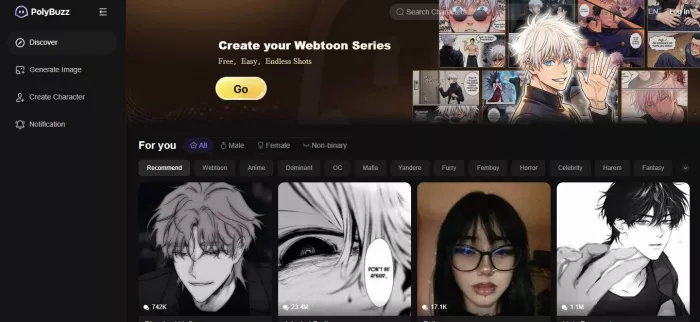
At its core, Polybuzz is an AI-driven social platform where conversations revolve around characters rather than simple prompts.
Instead of opening a blank chat window, users browse a library of personalities. Each character has a profile containing personality traits, a story background, tags, and sometimes an avatar image. Users can start a conversation with any character instantly.
The platform supports interactions across web browsers, mobile apps, and desktop environments, making it accessible to a wide audience.
The key idea behind Polybuzz is that conversations should feel like interactions with individuals rather than machines. AI characters are designed with personality traits, speech styles, and narrative context that shape how they respond.
For example:
● A historical character might speak formally and reference real events.
● An anime character may respond dramatically and emotionally.
● A fictional companion might behave like a friend or mentor.
This design creates a narrative environment where conversations can evolve.
Although the platform appears simple on the surface, the system combines several AI technologies behind the scenes.
The typical workflow involves three main steps: character creation, conversation generation, and memory management.
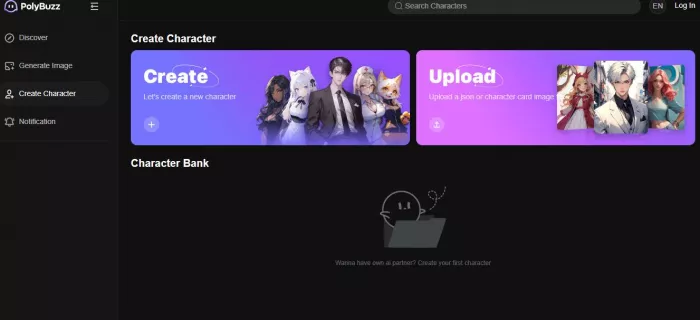
Step 1: Create or Choose a Character
The first step is deciding who you want to talk to.
On Polybuzz, users can either pick an existing AI character from the platform’s library or create a new one from scratch. If you choose to build your own character, the platform asks for a few important details that shape how the AI will behave.
These usually include:
1. Character name
2. Personality traits such as kind, sarcastic, mysterious, caring, confident, or playful
3. Background story to explain who the character is and what kind of world they belong to
4. Conversation style, which affects how they speak, respond, and express emotions
5. An avatar image to visually represent the character
The avatar can often be uploaded manually or generated with AI. In many cases, users simply describe how the character should look, and the system creates a matching image.
In simple terms, this step is like building the identity of the character before the chat even starts.
Step 2: Start the Conversation
Once the character is ready, the next step is chatting with it.
When a user sends a message, Polybuzz does not generate a random answer. Instead, it looks at several pieces of information before replying. This helps the response feel more natural and more in character.
The system mainly uses three things:
1. Your message
2. The character profile you selected or created
3. The conversation history from earlier messages
For example, if the character is meant to be a serious fantasy knight, the AI will usually reply in a formal or dramatic way. If the character is designed as a funny best friend, the tone will be lighter and more casual.
This is what makes Polybuzz different from a normal chatbot. The AI is not just answering a question. It is trying to respond as a specific personality.
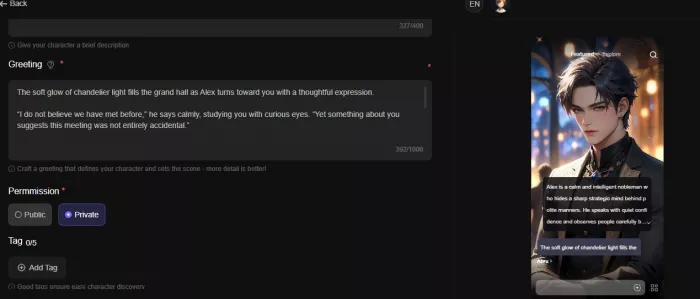
Step 3: Keep the Character Consistent
After the conversation begins, Polybuzz tries to keep the character’s behavior consistent over time.
That means the AI does not only look at the latest message. It also tries to remember what has already happened in the conversation. This gives chats a stronger sense of continuity.
For example, the character may remember:
● your name
● earlier parts of the story
● facts you shared before
● the emotional tone of the conversation
● The relationship that has developed between you and the character
This memory system is important because it makes longer chats feel more immersive. Instead of restarting with every message, the conversation can build naturally.
In many cases, paid plans offer better or longer memory, which helps users have deeper storylines and more sustained roleplay sessions.
The table below summarizes the main capabilities of the Polybuzz platform.
| Capability | Description |
| AI Character Conversations | Users can chat with millions of AI personalities |
| Character Creation | Custom characters with personality, story, and appearance |
| Voice Interaction | Some characters support voice responses |
| Image Generation | AI can generate images or scenes based on conversation context |
| Roleplay Environments | Characters can participate in narrative scenarios |
| Long Conversation Memory | Conversations can maintain context over time |
These capabilities turn the platform into a hybrid of AI chatbot, storytelling tool, and social interaction space.
One of Polybuzz's defining features is its massive character ecosystem.
The platform hosts millions of personalities spanning many categories.
Users can interact with characters inspired by:
● Anime series
● Movies and TV shows
● Gaming franchises
● Celebrities
● Historical figures
● Original fictional characters
The official platform highlights libraries that include thousands of anime series and movie characters available for interaction.
AI Character Categories on Polybuzz
| Category | Examples |
| Anime and Manga | Characters inspired by popular anime universes |
| Movies and TV | Film characters and actors |
| Gaming | Video game heroes and villains |
| Music and Celebrities | AI versions of artists and public figures |
| Original Characters | Community-created personalities |
| Companions | AI friends, mentors, or romantic companions |
Because users can create and publish their own characters, the ecosystem continues to grow organically.
This community-driven expansion explains how the platform reached tens of millions of characters.
Although the technology is impressive, the real story lies in how people use it.
Users rarely treat Polybuzz like a typical chatbot.
Instead they use it in creative or emotional contexts.
Entertainment and Roleplay
Many users treat Polybuzz like interactive fiction. They roleplay with characters from movies or anime and create new storylines.
For example a user might:
● join an imaginary fantasy quest
● talk with a movie villain
● interact with a historical figure
Creative Writing
Writers often use AI characters to brainstorm dialogue.
Instead of imagining how a character might respond, they simply ask the AI version.
This approach helps develop narrative ideas quickly.
Emotional Companionship
Some users use AI characters for conversation when they want a supportive listener.
Polybuzz even promotes AI companions such as AI girlfriends or AI friends designed for personalized conversation experiences.
Language Practice
Another practical use is language learning. Conversing with AI characters can simulate real conversations in a new language.
The platform offers several advantages but also faces challenges common in AI character systems.
| Strengths | Limitations |
| Massive character library | Content moderation debates |
| Custom character creation | Some conversations become repetitive |
| Strong roleplay immersion | AI accuracy varies |
| Available on web and mobile | Premium features locked behind a subscription |
| Community-driven ecosystem | Ethical concerns about AI companions |
Large communities discussing Polybuzz often mention content moderation policies and restrictions around certain types of roleplay.
These debates are common across AI character platforms.
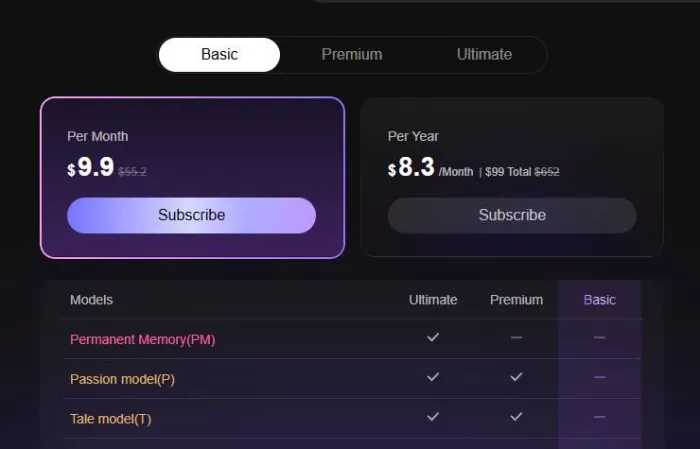
Polybuzz follows a freemium model. Users can access the platform for free, while advanced capabilities such as improved AI models, longer memory, and enhanced chat features are unlocked through paid subscriptions.
Subscription Plans
| Plan | Price (Monthly) | Key Features |
| Free | $0 | Basic AI conversations, character browsing, and limited features |
| Poly Standard | $9.90/month | Ad-free chat, improved AI responses, and extended interaction features |
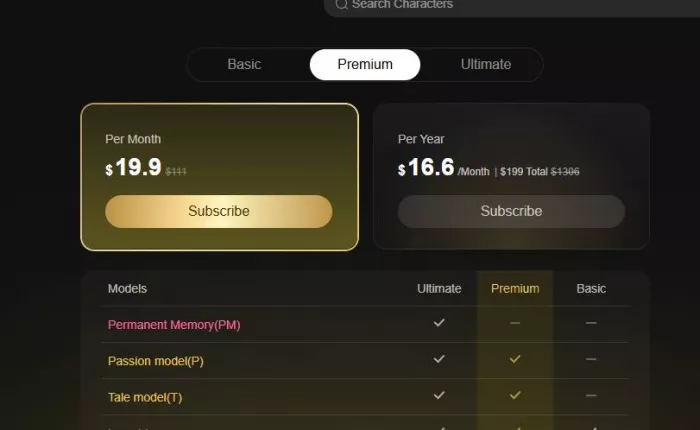
| Poly Premium | $19.90/month | Advanced AI capabilities, longer memory, and additional customization |
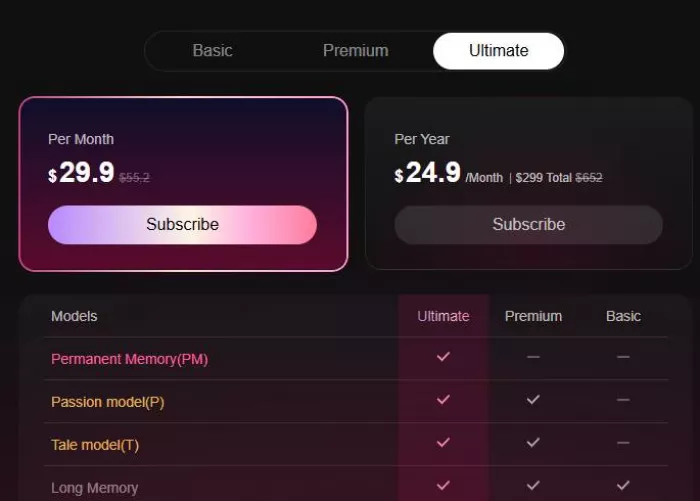
| Poly Ultimate | $29.90/month | Full feature access, highest limits, priority processing |
These subscription options appear in the official App Store in-app purchase listing for Polybuzz.
Coin Packs (Optional Add-Ons)
Polybuzz also offers coins that function as micro-credits for certain premium actions such as regenerating responses, extending voice chat sessions, or unlocking special AI interactions.
| Coins | Price |
| 1000 coins | $2.49 |
| 3000 coins | $4.99 |
| 8000 coins | $9.99 |
| 20000 coins | $19.90 |
Polybuzz operates in a competitive space alongside several other AI character platforms.
| Platform | Character Library | Roleplay Focus | Custom Characters | Voice Support |
| Polybuzz AI | 20M+ characters | Strong | Yes | Yes |
| Character AI | Large | Strong | Yes | Limited |
| Chai AI | Moderate | Moderate | Yes | Limited |
| Janitor AI | Smaller | Strong | Yes | Limited |
Polybuzz differentiates itself through its massive character library and multimedia interaction features.
AI chat platforms are evolving from productivity tools into social environments.
Polybuzz represents a major step in this shift. Instead of asking a chatbot for answers, users build relationships with digital personalities.
For some people, the platform functions as a creative sandbox. For others, it is entertainment, companionship, or storytelling.
Regardless of the motivation, Polybuzz demonstrates how AI is moving beyond simple text generation and into interactive experiences that blend technology, narrative, and social interaction.
As AI models improve, platforms like Polybuzz may become some of the most interesting spaces where human imagination and artificial intelligence meet.

The First Few Minutes on the Site Tell You a LotWhen I first landed on...

Fraud has evolved alongside technology. What was once limited to paper...
SoftBank Group has secured a $40 billion loan from a consortium o...

Recent advances in neural networks and large language models have sign...

Meta Platforms has significantly increased its investment in a West Te...
One tool gaining attention among programmers is Blackbox AI. Rather th...

Discussion