For decades, the enterprise mainframe has been the quiet backbone of global business. Banks process billions of transactions through it, airlines manage reservations on it, and governments rely on it for mission-critical records. Platforms like IBM Z running z/OS continue to deliver unmatched reliability, security, and throughput.
Yet in 2026, the conversation around mainframes has fundamentally changed. The question is no longer whether mainframes remain powerful—they clearly do—but whether organizations can continue operating them without modernization.
Across industries, CIOs are realizing that legacy architectures built decades ago are now colliding with modern expectations: real-time data access, AI-driven decision making, hybrid cloud ecosystems, and stricter regulatory oversight. In this environment, modernization is no longer a technology upgrade—it is a business risk mitigation strategy.
Several converging forces have transformed mainframe modernization from a long-term IT aspiration into an immediate enterprise priority.
A large portion of the world’s business logic is still written in COBOL. Financial institutions, insurance companies, and public-sector systems depend on millions of lines of COBOL code developed over decades.
However, the workforce capable of maintaining these systems is shrinking rapidly. Many senior engineers who built or maintained these systems are approaching retirement, and younger developers rarely specialize in traditional mainframe technologies.
The result is a widening knowledge gap. Organizations increasingly struggle to maintain legacy applications, troubleshoot performance issues, or extend functionality without significant training or external support.
Modern digital services require immediate access to transactional data. Fraud detection, personalized customer experiences, and predictive analytics all rely on real-time data streams.
While mainframes excel at processing high-volume transactions, traditional architectures often expose data through batch processes or tightly coupled applications. That creates friction when enterprises attempt to integrate legacy systems with AI platforms, machine-learning pipelines, or cloud-based analytics tools.
Companies now expect core systems to function as data platforms, not just transaction engines.
Few enterprises today operate entirely on-premises or entirely in the cloud. Most are adopting hybrid architectures that combine traditional infrastructure with platforms from providers like Amazon Web Services, Microsoft Azure, and Google Cloud.
This shift introduces new integration challenges. Legacy systems often rely on proprietary protocols or tightly coupled data stores such as IBM Db2, IMS, or VSAM. Connecting these environments to cloud-native applications requires new API layers, event streams, and data virtualization technologies.
Without modernization, mainframes risk becoming isolated silos in a connected ecosystem.
Mainframes remain extremely efficient at high-volume workloads, but costs can escalate when systems scale inefficiently. Licensing models tied to processing power and storage consumption can make long-term expansion expensive.
Organizations are therefore examining how modernization strategies—whether through workload optimization, hybrid integration, or selective migration—can improve cost efficiency while maintaining reliability.
Many organizations postpone modernization because their core systems “still work.” However, the risks of delay are becoming increasingly clear.
Legacy architectures often rely on complex batch processing windows. If those processes exceed their allocated time slots, downstream systems may experience cascading delays. In industries such as finance or healthcare, even small disruptions can affect thousands of customers.
Regulators are increasingly demanding transparent data traceability, real-time reporting, and faster response times for customer interactions. Systems designed around overnight processing cycles struggle to meet these expectations.
While mainframes themselves are highly secure, legacy applications can create vulnerabilities when integrated with modern digital channels such as mobile apps or web APIs. Without modernization, security controls may not align with current DevSecOps practices.
Perhaps the greatest risk is strategic. If launching new digital services requires months of integration work with legacy systems, innovation slows dramatically. Organizations may find themselves unable to compete with digital-native companies that build on flexible cloud architectures.
Certain operational indicators consistently appear in organizations approaching modernization decisions.
When multiple signals appear simultaneously, modernization shifts from optional improvement to strategic necessity.
Enterprises rarely pursue a single modernization strategy. Instead, they combine multiple approaches depending on application complexity, regulatory requirements, and business priorities.
Many organizations retain their core workloads on existing mainframe platforms while modernizing the surrounding development ecosystem.
This approach may include:
By modernizing development practices, enterprises can extend existing systems while preserving the reliability and security advantages of mainframe architecture.
Hybrid integration connects legacy systems with cloud-native applications without moving the underlying data.
Technologies such as event streaming, change data capture, and API gateways allow enterprises to expose mainframe transactions to distributed applications. This strategy enables innovation while minimizing disruption to stable core systems.
Hybrid integration is increasingly common because it allows organizations to modernize customer experiences without rewriting entire back-end systems.
In some cases, organizations choose to move specific workloads away from the mainframe entirely.
Common candidates include:
Migration may involve rehosting existing applications on distributed platforms or rewriting them in modern programming languages. While this approach can unlock flexibility, it requires careful planning to avoid introducing new operational risks.
Successful modernization initiatives rarely begin with technology decisions alone. Executive leadership expects clear business outcomes.
Most modernization programs justify investment through three measurable value categories.
Optimization efforts may delay expensive hardware upgrades, reduce licensing costs, or eliminate redundant processing jobs. In large enterprises, even modest efficiency improvements can produce significant financial impact.
Modernization improves operational resilience, security visibility, and regulatory compliance. These benefits reduce the probability of outages, security incidents, or regulatory penalties.
Real-time APIs, advanced analytics, and AI-driven personalization can unlock new customer experiences. These capabilities enable digital products that legacy systems alone cannot easily support.
Organizations that frame modernization around business outcomes rather than infrastructure changes gain stronger executive support and more sustainable funding.
Large transformation projects often fail because they attempt too much change at once. A phased execution model typically produces better outcomes.
Enterprises begin by analyzing application dependencies, code complexity, and operational patterns. Automated scanning tools help identify unused jobs, redundant processes, and modernization candidates.
Early wins—such as exposing a high-value transaction through an API—can demonstrate immediate value.
Organizations then select a manageable workload for deeper modernization. This stage may involve refactoring code, introducing automated testing frameworks, or moving a non-critical component to a new platform.
Pilot projects help teams develop practical experience and validate architectural assumptions.
Once initial successes are proven, modernization practices expand across additional applications. Infrastructure automation, DevSecOps pipelines, and hybrid integration frameworks allow transformation to scale efficiently.
The key objective is repeatable modernization processes, not one-time migrations.
Modernization does not eliminate the need for enterprise-grade governance. In fact, hybrid environments often require stronger oversight.
Security models must integrate legacy identity systems with modern cloud-based authentication frameworks. Audit logging, encryption, and access controls should remain consistent across platforms.
By aligning governance processes early in modernization initiatives, organizations avoid compliance gaps as systems evolve.
Artificial intelligence is rapidly becoming a core enterprise capability. Fraud detection, supply-chain forecasting, customer analytics, and predictive maintenance all rely on machine learning.
However, AI models require high-quality, accessible data. Organizations therefore must ensure that mainframe data can integrate with analytics platforms while maintaining governance and security standards.
Event streaming, data virtualization, and real-time APIs are increasingly essential for connecting operational systems with AI pipelines.
Enterprises that modernize their core systems now will be better positioned to adopt emerging technologies over the next decade.
The enterprise mainframe remains one of the most powerful computing platforms ever built. Its reliability and performance continue to support some of the world’s most critical business operations.
However, the surrounding technology landscape has changed dramatically. AI-driven analytics, hybrid cloud architectures, and real-time digital services now define competitive advantage.
In this environment, modernization is not about replacing the mainframe—it is about ensuring that core systems evolve alongside the business.
Organizations that recognize the 2026 modernization tipping point will transform legacy platforms into powerful digital foundations. Those that delay may discover that the greatest risk is not the technology itself, but the inability to adapt it for the future.
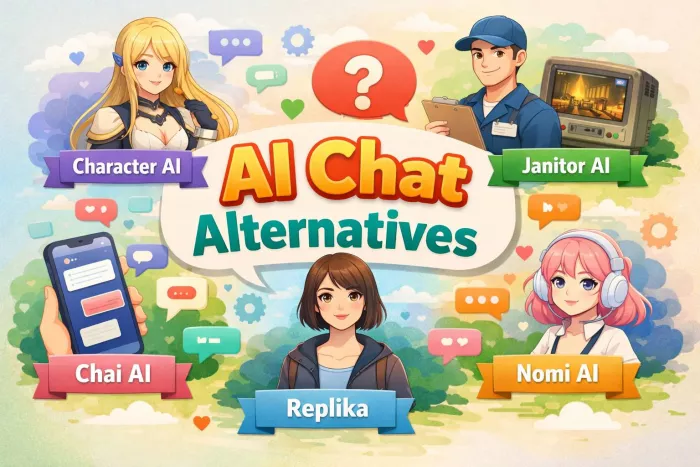
AI chat platforms designed for roleplay and interactive conversations...
Goth AI is a character-based AI chat platform designed for dark, gothi...
Artificial Intelligence (AI) is increasingly taking a front seat in sh...
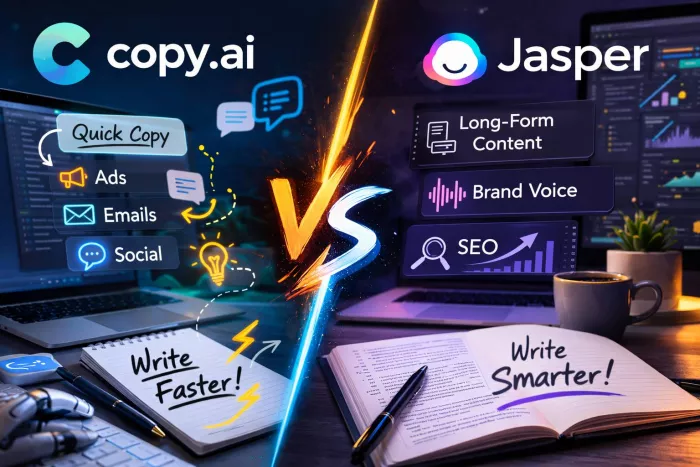
AI copywriting tools have become core infrastructure for modern market...
What AI Insights DualMedia Is and Why It ExistsAI Insights DualMedia r...
If you are choosing between Rytr and Writesonic, you probably care abo...

Discussion