Intel has joined Elon Musk’s ambitious “Terafab” semiconductor initiative, marking a significant alignment between one of the world’s largest chipmakers and Musk’s expanding AI ecosystem spanning Tesla, SpaceX, and xAI. The collaboration is aimed at producing advanced processors to power humanoid robots, autonomous systems, and large-scale AI data centers, including future space-based infrastructure.
The announcement, made Tuesday, immediately boosted investor sentiment, with Intel’s stock rising between 2% and 5% in early trading following the news.
At the center of the partnership is Terafab, a massive chip manufacturing complex envisioned by Musk to address what he has repeatedly described as a global shortage of AI compute capacity. The project aims to produce up to one terawatt of computing power annually, a scale far beyond current industry output.
Intel’s role is expected to focus on its core strengths: semiconductor design, fabrication, and advanced packaging. While the companies have not disclosed specific operational details, Intel’s manufacturing expertise fills a critical gap in Musk’s plan, as Tesla and SpaceX lack deep experience in high-volume chip production.
The Terafab project itself is structured as a vertically integrated manufacturing system, bringing together every stage of chip production under one roof. This includes logic chips, memory, packaging, and testing, allowing faster iteration cycles compared to traditional fragmented supply chains.
Musk has outlined plans for at least two advanced fabrication facilities in Austin, Texas. One will focus on chips for Tesla’s autonomous vehicles and Optimus humanoid robots, while the other is intended to support AI data centers, including those potentially deployed in space via SpaceX satellites.
The move reflects a broader shift in the semiconductor industry, where large technology companies are increasingly seeking control over chip supply amid rising demand for AI workloads. Musk has previously indicated that existing suppliers such as TSMC and Samsung may not be able to scale production quickly enough to meet future requirements.
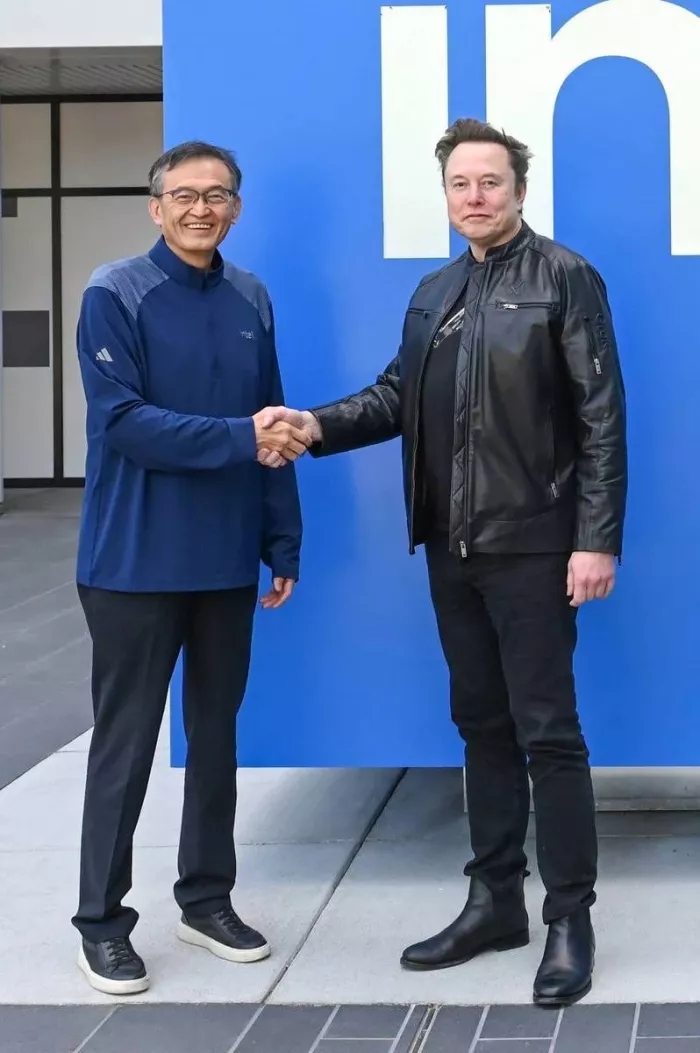
For Intel, the partnership represents a strategic opportunity to reassert its position in the AI chip race, where it has lagged behind rivals like Nvidia and AMD in recent years. The company is currently undergoing a major restructuring under CEO Lip-Bu Tan, including cost cuts and efforts to expand its foundry business.
Analysts view the deal as mutually beneficial. Musk gains access to decades of semiconductor manufacturing expertise, while Intel secures a high-profile customer aligned with some of the most aggressive AI and robotics ambitions in the industry.
However, the scale of Terafab also raises questions. Estimates suggest the full project could cost trillions of dollars over time, and executing a fully integrated chip ecosystem at this scale would challenge even the most established players.
Still, the collaboration signals a growing convergence between hardware manufacturing and AI deployment, as companies race to secure the computational infrastructure needed for next-generation technologies.
What "Safe" and "Legit" Actually Mean HereMost reviews answer neither...
Where automation actually saves time in real workflowsInstead of think...
April 7, 2026Samsung Electronics said Tuesday it expects first-quarter...

DeepSeek AI usually stops meeting expectations at a very specific poin...

For the past few months, a name kept appearing in my inbox and social...
Anthropic is tightening how its AI coding platform is billed, confirmi...

Discussion