For years, businesses believed better dashboards meant better decisions. If you could see your KPIs clearly, track weekly trends, and review performance reports, you were “data-driven.”
But something subtle has changed in the last few years. Leaders are realizing that visibility alone isn’t enough. Seeing what happened last week doesn’t protect you from what will happen tomorrow.
That’s where artificial intelligence is quietly redefining business operations.
The real shift isn’t from manual to automated. It’s from analytics to intelligence.
According to McKinsey’s latest global research, more than half of organizations now use AI in at least one function, and the companies seeing real financial impact are those embedding AI into core workflows rather than experimenting at the edges.
The difference is simple but profound. Analytics tells you what happened. Intelligence tells you what is about to happen and what to do next.
Think about how most operational reviews still work. A dashboard shows that delivery time slipped by two percent. Or customer satisfaction dipped slightly this quarter. Or costs rose marginally.
The numbers are clear. But the cause isn’t.
Traditional analytics aggregates averages. And averages hide early warning signals. A small workflow change, a system update, a minor behavioral shift, these things rarely show up in summary reports until they become large enough to hurt performance.

Enterprise research published in peer-reviewed AI transformation studies shows that many organizations operate in what experts describe as “data-rich but insight-poor” environments.
The data exists. The problem is interpretation.
Modern operations move too quickly for weekly reviews to catch structural friction in time. By the time performance drift is visible, the underlying behavior has already spread across teams.
That’s the structural weakness of descriptive reporting.
AI changes the equation because it doesn’t just count outcomes, it analyzes patterns.
Instead of reporting that task completion time increased, AI systems ask why. They examine workflow sequences, system navigation behavior, communication patterns, and even unstructured data like emails or transcripts.
Snowflake’s enterprise AI framework highlights that real transformation happens when organizations unify fragmented data streams into a single intelligence layer.
Once data silos are removed, machine learning models begin mapping behavioral sequences instead of summarizing outputs.
For example, imagine fulfillment delays increasing slightly. An intelligence system may trace the cause back to a documentation step that now takes 90 seconds longer after a software update. That’s not something a dashboard average would reveal. But pattern analysis can.
That’s the real evolution. Intelligence surfaces structural causes before they escalate.
The most meaningful impact of AI isn’t automation. It’s anticipation.
Businesses today operate in volatile environments, with shifting demand, supply chain disruptions, regulatory changes, and fluctuating consumer behavior. Reacting after the fact is no longer sustainable.
Research exploring how AI is reshaping operational growth shows that predictive analytics improves planning accuracy, resource allocation, and risk forecasting across industries.
Machine learning models evaluate historical trends alongside real-time data. They simulate scenarios continuously in the background.
In practical terms, this means:
A logistics team can anticipate route congestion before delays cascade.
A finance team can detect anomaly patterns before fraud escalates.
A service team can identify churn risk during a live interaction instead of after cancellation.
This shift toward predictive intelligence is what separates resilient organizations from reactive ones.
Another development gaining momentum is agentic AI, systems capable of reasoning across multiple variables and recommending actions autonomously.
Earlier automation tools executed fixed rules. Modern AI agents evaluate context dynamically.
Industry analysis on AI-driven analytics transformation shows that companies integrating AI into decision loops rather than surface-level reporting experience measurable improvements in operational efficiency.
For example, in procurement, AI can assess supplier performance history, price volatility, and compliance data simultaneously before recommending a sourcing shift. In workforce management, it can adjust scheduling based on predicted demand patterns.
This doesn’t eliminate human leadership. It removes repetitive tactical decisions that slow down execution.
Decision velocity increases. And in competitive markets, speed often equals advantage.
One overlooked benefit of AI in operations is friction reduction.
Employees today work across dozens of tools. CRM systems, project management platforms, messaging apps, reporting dashboards, constant toggling increases cognitive strain and error risk.
IMD’s research on AI’s real-world impact emphasizes that the most successful deployments focus on augmenting human capability rather than replacing it.
AI systems can detect when workflow complexity rises. They analyze application switching frequency, task completion time variance, and error clusters. When friction spikes, redesign becomes possible.
Reducing digital friction improves more than efficiency. It improves employee stability, morale, and retention.
Intelligence becomes not just a productivity tool, but a human sustainability strategy.
The financial case for AI is often framed in cost reduction terms. But the deeper impact lies in stability and predictability.
Research analyzing AI’s operational influence shows that organizations embedding AI into core processes report improvements in forecast reliability, service consistency, and risk mitigation (see findings on The Impact of Artificial Intelligence on Business Operations).
But here’s the nuance: AI doesn’t automatically produce ROI. The companies seeing measurable impact align AI deployment with specific operational goals. They start with defined use cases. They validate predictive accuracy. They scale gradually.
AI must be architectural, not experimental.
When intelligence becomes embedded within daily workflows rather than layered on top, performance volatility decreases.
At its core, the shift from analytics to intelligence represents a change in mindset.
Analytics measures. Intelligence anticipates.
Analytics reviews. Intelligence guides.
Thought leadership examining how AI turns insight into impact consistently highlights that the true advantage lies in decision agility. The businesses that will thrive over the next decade are not the ones with the most data. They are the ones who convert data into foresight quickly and responsibly.
The future of operations is not about larger dashboards. It’s about smaller correction cycles. Faster adjustments. Early detection. Continuous refinement.
AI makes that possible.
Artificial intelligence is not replacing business analytics. It is redefining it.
It transforms fragmented metrics into unified behavioral maps. It replaces delayed reaction with early intervention. It turns historical reporting into forward-looking intelligence.
In a world where disruption is constant, the ability to anticipate matters more than the ability to review.
The journey from analytics to intelligence isn’t a trend. It’s the foundation of modern operational resilience.
And the organizations embracing this shift today are building something far more valuable than efficiency, they are building adaptability.

AI-powered image editing has moved far beyond simple filters. Today’s...
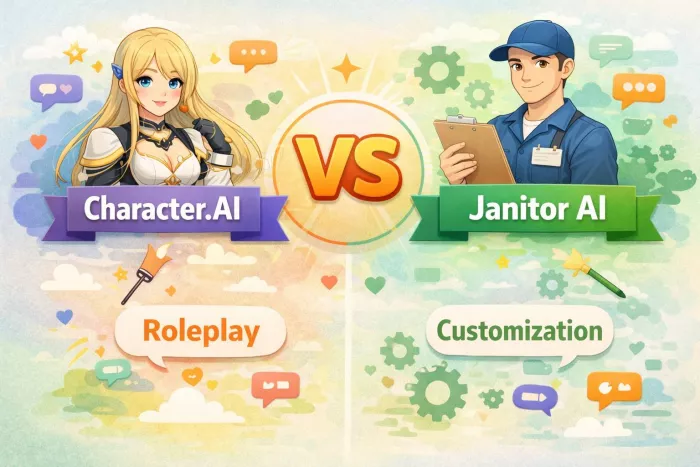
AI chat platforms built around fictional characters and roleplay conve...
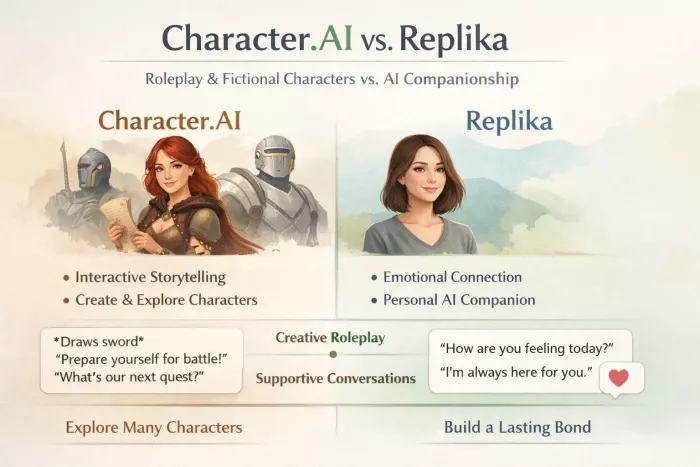
AI chat platforms have evolved far beyond simple question-and-answer b...

Platform OverviewCutout.pro is an AI-powered image editing platform de...

AI chat platforms designed for roleplay and interactive conversations...
Goth AI is a character-based AI chat platform designed for dark, gothi...

Discussion