Artificial intelligence is no longer a peripheral tool in the justice system. It is quietly reshaping how evidence is created, interpreted, challenged, and ultimately trusted. What began with simple dashboard cameras capturing traffic incidents has evolved into a complex ecosystem of sensor feeds, machine vision analysis, metadata reconstruction, and probabilistic modeling.
For legal professionals, investigators, and judges, this shift is not theoretical. It affects admissibility standards, cross-examination strategy, evidentiary weight, and due process itself. The question is no longer whether AI will influence legal evidence. It already does. The real question is how deeply courts understand what they are accepting.
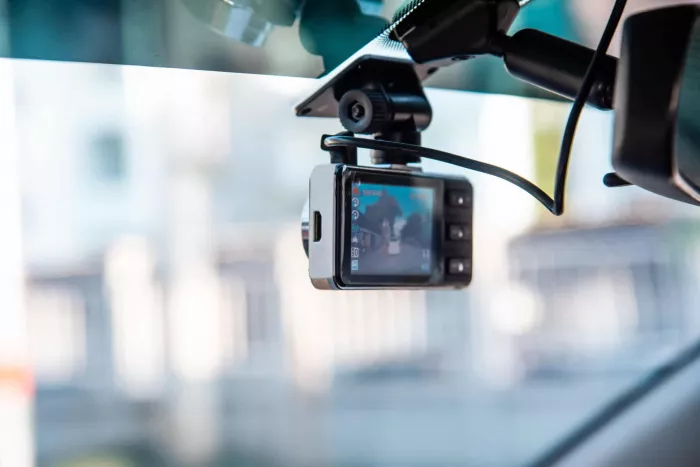
Dashcams introduced something deceptively simple: an impartial recording device mounted inside a vehicle. In practice, however, even dashcam footage is not as “neutral” as it appears.
Key considerations include:
These technical elements influence how events are perceived. A vehicle may appear closer or faster than it actually was. Brake lights may look delayed due to frame intervals. Even timestamp drift can affect sequence reconstruction.
Dashcams created the expectation that video equals truth. AI complicates that assumption.
The major shift over the past decade is this: evidence is no longer only recorded — it is interpreted and reconstructed by algorithms.
Modern AI systems can analyze:
Using machine learning models, systems can estimate:
These outputs are often presented as polished 3D simulations in court. To a jury, they appear scientific and authoritative.
But they are not recordings. They are probabilistic reconstructions.
That distinction matters.
AI-generated evidence is powerful not because it is always correct, but because it is persuasive.
A traditional accident reconstruction expert might testify using diagrams and physics formulas. An AI model produces a cinematic replay — complete with environmental modeling and motion smoothing.
The cognitive impact is different.
Research in behavioral psychology consistently shows that visual simulations influence juror perception more strongly than static explanations. When an event is “shown,” it feels more definitive, even if the underlying model includes assumptions.
In practice, AI systems must make decisions about:
These choices introduce assumptions — often invisible to non-technical observers.
Beyond visual reconstruction, AI increasingly analyzes metadata.
Consider a smartphone involved in a criminal investigation. AI tools can analyze:
From these signals, systems infer behavioral patterns.
For example:
These inferences are not direct facts. They are modeled interpretations.
In cross-examination, the defense must understand how those models classify activity. Many do not.
AI also plays a growing role in:
In large-scale investigations, humans cannot manually sift through millions of data points. AI systems flag anomalies.
However, anomaly detection does not equal wrongdoing. It identifies statistical deviation, not intent.
Courts must be cautious about treating predictive flags as conclusive indicators.
In jurisdictions that follow evidentiary standards similar to Daubert principles, expert testimony must be:
AI models complicate this analysis.
Many AI systems — particularly deep learning models — cannot easily explain how they reach conclusions. Even developers may not be able to provide a step-by-step reasoning path.
If an accident reconstruction model outputs a 92% confidence in a collision sequence, what does that percentage truly represent?
Without transparency in:
courts risk admitting conclusions without understanding their boundaries.
Imagine a highway collision involving three vehicles at night.
Available data includes:
An AI platform ingests all inputs and produces a synchronized 3D timeline.
It estimates that Vehicle A changed lanes 1.3 seconds before impact and that Vehicle B was exceeding the speed limit by 8 km/h.
Where do these numbers come from?
If any of those inputs contain distortion, the reconstruction shifts.
A skilled cross-examiner will ask:
What was the model’s error range?
Were alternative scenarios simulated?
How sensitive were results to slight input variation?
Was the software independently validated?
These are not academic questions. They determine liability.
AI outputs often present numerical precision (e.g., 1.27 seconds). But real-world data is messy. Precision does not equal accuracy.
If reconstruction models are trained primarily on certain roadway types or lighting conditions, they may perform poorly in unusual environments.
As generative AI improves, courts must confront fabricated digital evidence. Authentication protocols will require:
The assumption that “video cannot lie” is already obsolete.
Well-funded parties can afford advanced AI forensic analysis. Smaller litigants may not. This introduces asymmetry in evidentiary power.
AI in evidence does not eliminate human judgment — it relocates it.
Choices about:
shape the final narrative.
Ethically, expert witnesses must clearly disclose:
Transparency strengthens credibility. Concealment undermines justice.
Courts are gradually adapting. Judges increasingly request:
In the future, we may see:
The legal system historically adapts slowly. But the velocity of AI development is forcing acceleration.
If you encounter AI-generated evidence:
Do not treat simulation as fact. Treat it as expert opinion expressed in digital form.
We are moving from an era where evidence was primarily testimonial to one where it is computational.
Dashcams started the transition. AI has expanded it.
But even the most advanced algorithm does not “know” what happened. It estimates. It models. It predicts.
Courts must remember that justice depends not on technological sophistication, but on methodological clarity.
The expanding role of AI in legal evidence is neither inherently dangerous nor inherently reliable. It is powerful.
And power in the courtroom must always be examined — not merely admired.

Artificial intelligence has rapidly moved beyond productivity tools an...

AI website builders have shifted from simple template tools to systems...

April 4, 2026Elon Musk has asked banks involved in SpaceX’s anticipate...

When dashboards exist but decisions still stallA mid-sized ecommerce c...

Alternatives Based on What You Want to FixIf You Want Better Pipeline...
Canberra, April 1, 2026- The Australian government has entered into a...

Discussion