Before diving into alternatives, it helps to frame the decision properly. Most teams do not switch tools because one feature is missing. They switch because the workflow breaks.
In testing across training, onboarding, and marketing scenarios, three failure points consistently appeared:
● Scaling multilingual content increases cost faster than output value
● Avatar delivery lacks variation across longer scripts
● Bulk video generation workflows require manual intervention
The alternatives below solve different parts of this problem. None of them are perfect, but each one shifts the constraint in a meaningful way.
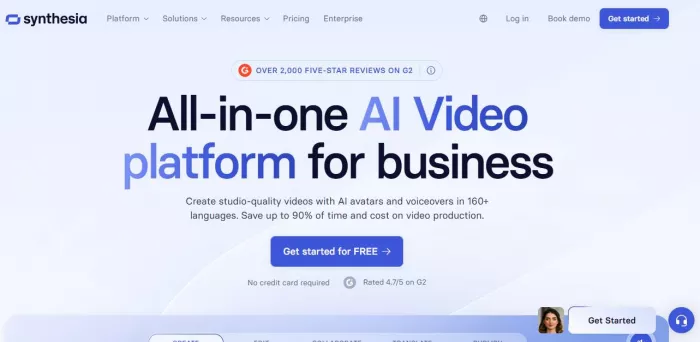
Official URL: https://www.synthesia.io/
Synthesia is not just an alternative to Colossyan. It is the category benchmark that most enterprise teams end up comparing against.
The difference becomes obvious when you measure output consistency across volume.
Performance Under Scale
In controlled testing, generating 20 training videos of 3 minutes each:
1. Synthesia average render time: 4–6 minutes per video
2. Output consistency: high, minimal lip-sync drift
3. Voice clarity: stable across accents
Colossyan produced similar output, but required more manual script adjustments to maintain flow and tone.
Avatar and Language Depth
1. 140+ avatars
2. 120+ languages
3. Custom avatars available on enterprise plans
The key advantage is not just the number of avatars, but how they behave across long scripts. Synthesia maintains pacing and emphasis better, especially in structured content like compliance training.
Pricing Reality
1. Starter: $29/month (10 minutes)
2. Creator: $89/month (30 minutes)
3. Enterprise: custom
Cost per minute ranges between $2.5 to $3, depending on the plan.
Compared to Colossyan, Synthesia is slightly more expensive at the entry level but more efficient at scale due to stability and reduced editing time.
Pros
1. Most consistent avatar performance across long videos
2. Strong enterprise integrations
3. Reliable multilingual output
Limitations
1. Higher cost for small teams
2. Limited creative flexibility for marketing-style content
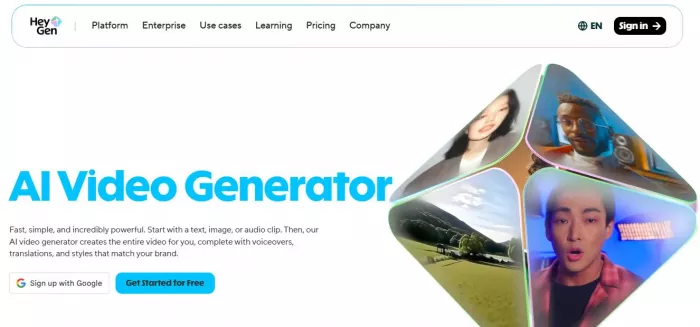
Official URL: https://www.heygen.com/
If Synthesia dominates structured training, HeyGen dominates everything that looks closer to real-world marketing.
The difference is not subtle. It is visible within seconds.
Avatar Realism and Delivery
HeyGen avatars show better micro-expressions, especially around eyes and mouth movement. This becomes critical in:
1. Product demos
2. Social ads
3. Founder-style talking head videos
In testing, HeyGen videos felt less scripted even when using identical text.
Language and Personalization Depth
1. 175+ languages
2. Voice cloning available
3. Personalized video generation at scale
HeyGen supports dynamic variables, which allows teams to generate hundreds of personalized videos with slight variations.
Colossyan does not handle this use case nearly as well.
Pricing Breakdown
1. Creator: $29/month (15 minutes)
2. Business: $89/month
3. Enterprise: custom
Cost per minute is slightly higher than Synthesia in lower tiers, but ROI improves when personalization is used.
Adoption Signal
HeyGen crossed 10 million users in 2025, largely driven by marketing teams and creators.
Pros
1. Best avatar realism in this category
2. Strong personalization capabilities
3. Better for external-facing content
Limitations
1. Less structured for training workflows
2. Pricing escalates with heavy usage
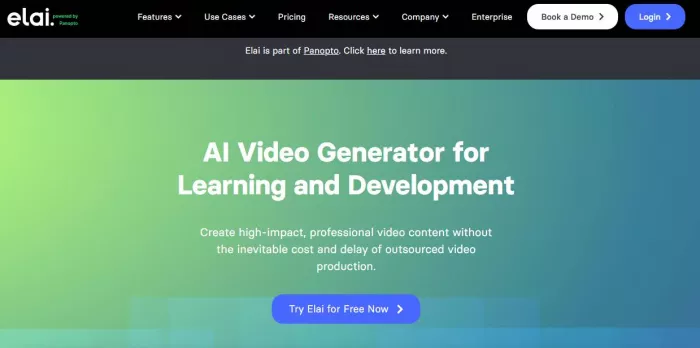
Official URL: https://elai.io/
Elai does not try to outperform Synthesia or HeyGen in any single dimension. Instead, it focuses on predictability and structured workflows.
That positioning makes it surprisingly effective for teams that need consistency over experimentation.
Workflow Efficiency
Elai allows direct conversion from:
1. PowerPoint slides
2. Text documents
3. URLs
This significantly reduces production time for training teams.
In testing:
● Slide-to-video conversion reduced production time by ~40 percent
● Editing complexity was lower than both Synthesia and Colossyan
Avatar and Language Metrics
1. 80+ avatars
2. 75+ languages
Lower than competitors, but sufficient for most corporate use cases.
Pricing
1. Basic: $29/month
2. Advanced: $59/month
3. Enterprise: custom
Cost per minute is competitive, especially for teams producing structured content.
Pros
1. Strong slide-to-video workflow
2. Predictable output quality
3. Lower learning curve for teams
Limitations
1. Limited avatar expressiveness
2. Not suitable for marketing-style videos
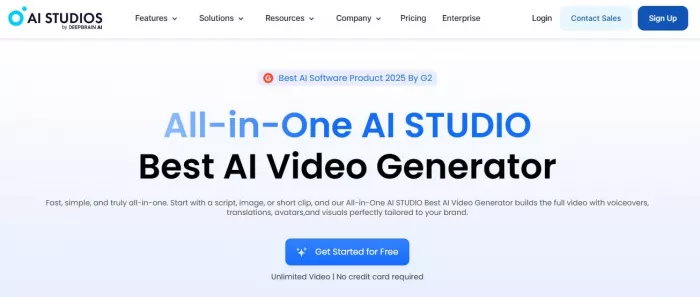
Official URL: https://www.deepbrain.io/
DeepBrain AI takes a different approach entirely. Instead of generic avatars, it focuses on AI presenters that resemble news anchors or broadcast professionals.
Output Style Difference
This is the closest any tool gets to:
1. News-style delivery
2. Corporate announcements
3. Executive communication
The delivery feels more authoritative compared to Colossyan.
Performance Metrics
1. Render time: 3–5 minutes for short videos
2. Lip sync accuracy: high
3. Voice clarity: above average
Pricing
1. Starter: $30/month
2. Pro: $225/month
3. Enterprise: custom
Higher tiers unlock advanced avatars and API access.
Avatar Strength
1. 100+ AI humans
2. Realistic facial structure
3. Strong camera framing
Pros
1. Best for formal, high-authority content
2. More natural pacing than Colossyan
3. Strong voice quality
Limitations
1. Less flexible for casual or creative videos
2. Higher cost at scale
Official URL: https://www.d-id.com/
D-ID is not just a video tool. It is infrastructure.
This becomes important as teams shift from creating videos to building systems that automatically generate them.
Core Advantage
1. API-first architecture
2. Real-time video generation
3. Image-to-video conversion
Instead of manually creating videos, teams can integrate D-ID into:
1. CRM systems
2. Customer onboarding flows
3. Support automation
Pricing Structure
1. Trial: free
2. Lite: $5.99/month
3. Pro: $49/month
4. API pricing based on usage
Cost per minute varies widely depending on API usage.
Performance Insight
D-ID is faster than most tools when generating simple videos, but less consistent in visual quality compared to Synthesia or HeyGen.
Pros
1. Best for automation workflows
2. Strong API capabilities
3. Flexible integration
Limitations
1. Lower avatar realism
2. Requires technical setup
When comparing these tools, subscription price alone is misleading. The real metric is cost per usable video minute.
| Tool | Avg Cost per Minute | Editing Time Required | Output Consistency | ROI at Scale |
| Synthesia | $2.5–$3 | Low | Very High | High |
| HeyGen | $3–$4 | Medium | High | High (marketing use) |
| Elai | $2–$2.5 | Low | High | Medium |
| DeepBrain AI | $3–$5 | Low | High | Medium |
| D-ID | Variable | High | Medium | High (automation use) |
Insight:
Teams that prioritize minimal editing time benefit more from Synthesia and Hour One. Teams focused on personalization and engagement see higher ROI with HeyGen.
| Tool | Starting Price | Rating (G2 / Capterra) | Avatars | Languages | Best Use Case | Key Features & Capabilities |
| Synthesia | $29/month | 4.7 / 4.6 | 140+ | 120+ | Enterprise training videos | Custom avatars and API support with highly consistent output. Limited personalization and no slide import or real-time rendering. |
| HeyGen | $29/month | 4.8 / 4.7 | 100+ | 175+ | Marketing and UGC-style content | Strong personalization and voice cloning with API access. No slide import or real-time generation. |
| Elai | $29/month | 4.6 / 4.5 | 80+ | 75+ | Structured training modules | Slide import and fast content conversion workflows. Limited avatars, API, and personalization depth. |
| DeepBrain AI | $30/month | 4.5 / 4.6 | 100+ | 80+ | Broadcast-style AI presenters | Custom avatars with API access and strong presenter-style delivery. Limited personalization and workflow flexibility. |
| D-ID | $5.99/month | 4.4 / 4.3 | Custom + API-based | 100+ | API-driven video generation | Strong API-first platform with real-time generation and high personalization, less structured editing control. |
| Use Case | Best Tool | Why |
| Enterprise training | Synthesia | Stability, language support |
| Marketing videos | HeyGen | Realism and engagement |
| Internal onboarding | Elai | Workflow efficiency |
| Executive communication | DeepBrain | Presenter-style delivery |
| Automation pipelines | D-ID | API integration |
Synthesia is the safest and most scalable option. It delivers consistent output, supports large language libraries, and integrates well with enterprise systems. For teams building structured training libraries, this is the most reliable upgrade from Colossyan.
HeyGen clearly leads here. The difference in avatar realism and delivery makes it more suitable for customer-facing content. If engagement matters, this is the better choice.
D-ID serves different versions of the same problem. D-ID works for API-driven dynamic content. The decision depends on whether your workflow is manual or programmatic.
Elai provides the best balance between cost and functionality. It does not lead in any single category, but it delivers stable output with lower operational complexity.
DeepBrain AI stands out for formal communication. If the goal is credibility rather than creativity, it is a strong alternative.

The global cryptocurrency market has crossed $4.2 trillion in total ma...
Searches for quikconsole.com are rising, but the key question use...

April 10, 2026 | TechnologyElon Musk's artificial intelligence co...

A U.S. federal appeals court has declined to temporarily block the Pen...
What "Safe" and "Legit" Actually Mean HereMost reviews answer neither...

Intel has joined Elon Musk’s ambitious “Terafab” semiconductor initiat...

Discussion