Artificial Intelligence (AI) is increasingly taking a front seat in shaping the future of training, performance enhancement, and analytics across various industries. With the potential to analyze vast amounts of data, uncover hidden insights, and provide real-time feedback, AI is enabling professionals to optimize their performance in ways that were once unimaginable. As we look ahead to the future, it is clear that AI will continue to play a critical role in revolutionizing how we approach training, not just for athletes, but for individuals in all fields who aim to improve their skills.
The integration of AI into training and performance analytics is not a passing trend—it’s a transformation that’s already underway and evolving rapidly. Industries from sports and healthcare to corporate environments are beginning to understand the value of AI’s analytical power in training processes. By leveraging AI, professionals can break down complex data and make more informed decisions that were previously beyond human capacity. Whether it’s understanding player performance in real-time or optimizing business training programs, AI helps unlock new potential for both individuals and teams.

AI excels at processing and analyzing large datasets to provide valuable insights that would be difficult for humans to uncover without assistance. This can be seen across various fields, but especially in training. By analyzing historical data, AI can identify patterns in performance, providing trainers with insights into areas of strength and areas that need improvement.
For example, in professional sports, AI-powered systems can analyze the biomechanics of players’ movements during practice sessions. This analysis goes beyond simple stats and highlights micro-level mistakes, such as improper posture or inefficient movement patterns. These insights enable coaches to address specific issues with a level of precision that traditional methods cannot.
In a professional basketball setting, for instance, AI can track the player’s movement during training, detect minor discrepancies in their jump shots, and suggest adjustments. It can even predict the likelihood of injury based on the player’s current form and training load, helping trainers develop a more personalized and effective training plan. This shift from a one-size-fits-all approach to a more individualized and data-informed training strategy is changing how performance enhancement is approached, especially in high-stakes environments.
Beyond simply analyzing historical data, AI has a wealth of practical applications in optimizing performance in real-time. These applications are transforming not only individual performance but also how entire teams or organizations improve.
AI can analyze individual performance in real time and adjust the training program accordingly. This dynamic feedback loop ensures that training is always relevant and focused on the right areas. Whether in corporate training or sports coaching, AI can track individual progress and modify goals to ensure that no one is left behind.
In corporate training, AI can assess the skills of employees, identify gaps, and create personalized learning paths. Instead of following a rigid training curriculum, employees can benefit from a program tailored to their specific needs, optimizing learning speed and effectiveness.
AI also excels at predictive analytics—anticipating the outcomes of specific training interventions based on vast amounts of historical data. This predictive capability helps trainers and managers plan for long-term success and understand the potential impact of certain strategies before they are implemented.
For example, in a sales training program, AI can predict how a particular strategy or sales pitch might perform based on data from past employees’ success rates. This can help companies test different approaches and choose the one most likely to yield the highest return on investment.
In healthcare, AI is being used to train surgeons and medical professionals. By using AI-powered simulators, medical professionals can practice procedures in a virtual environment that mimics real-world conditions. These simulators can adjust the difficulty of the task based on the user’s progress, offering real-time feedback on surgical precision and technique. The result? A more refined skill set and a higher level of preparedness for actual operations.
Another practical benefit of AI in training is its ability to provide real-time decision support. This goes beyond analytics—it enables trainers and athletes to make immediate adjustments during performance. For instance, in a tactical sports setting, AI can analyze the movements of a team during a match and suggest in-the-moment strategic adjustments based on opposing team patterns, player conditions, or other situational factors.
While the integration of AI in training offers remarkable benefits, it also introduces challenges and risks. It’s crucial to understand these limitations to make more informed decisions about its use.
AI systems are only as good as the data they are fed. If the data is biased or incomplete, the AI’s recommendations and analysis can be skewed. In training programs, this could mean that an individual’s weaknesses might be misrepresented, leading to the wrong interventions being implemented. It’s important to continually monitor AI systems to ensure that they are operating on high-quality, unbiased data.
One risk of heavily relying on AI in training is the potential for over-dependence on the technology. While AI can provide valuable insights, it cannot replace the expertise and judgment of human coaches or trainers. A balanced approach—where AI is used as a tool to complement, not replace, human knowledge—will yield the best results.
As we look to the future, it’s clear that AI will continue to play an increasingly integral role in training and performance enhancement across industries. Here are a few key trends that are likely to shape the landscape:
In the near future, AI will be increasingly integrated with wearable technology to provide even more precise and actionable insights. For example, AI-powered smart devices can monitor heart rate, fatigue levels, and muscle performance, adjusting training plans in real time. This combination of wearables and AI will allow for hyper-personalized training, tracking both physical and mental states during performance.
Rather than replacing humans, AI will likely collaborate with individuals to form powerful human-AI teams. In this future, athletes, employees, and professionals will work alongside AI to achieve their full potential. This could take the form of virtual coaching assistants or AI-powered performance mentors that guide professionals through their growth process, offering suggestions and monitoring progress continuously.
With the growing use of AI in training, ethical considerations will become more prominent. How much personal data is too much? How can AI be used without infringing on privacy? In the coming years, the industry will likely see stricter regulations and frameworks that address these concerns, ensuring that AI enhances training without violating personal rights.
The future of training is undeniably intertwined with AI’s capabilities in analytics and performance enhancement. While there are challenges and risks to consider, the potential benefits are transformative. AI is enabling real-time decision-making, optimizing personalized training, and providing deep insights into performance that were previously inaccessible. As AI continues to evolve, it will reshape not just how we train, but how we approach professional development across all industries. The key to success will be ensuring that AI is used in a balanced, ethical, and intelligent way, complementing human expertise to unlock the true potential of training and performance enhancement.
AI chat platforms designed for roleplay and interactive conversations...
Goth AI is a character-based AI chat platform designed for dark, gothi...
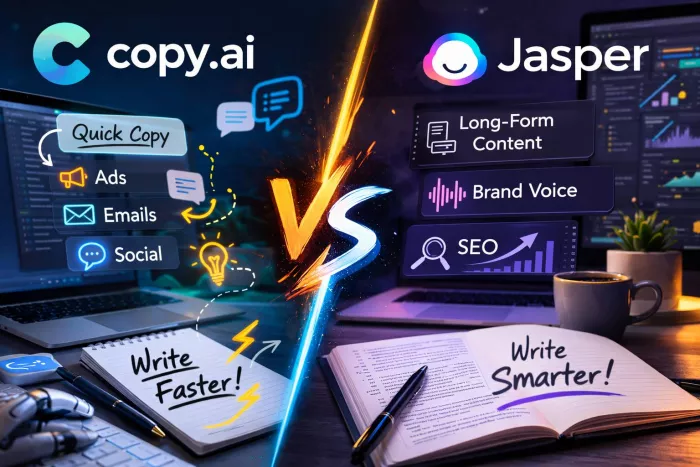
AI copywriting tools have become core infrastructure for modern market...
What AI Insights DualMedia Is and Why It ExistsAI Insights DualMedia r...

For decades, the enterprise mainframe has been the quiet backbone of g...
If you are choosing between Rytr and Writesonic, you probably care abo...

Discussion